Poland’s location and history have placed it within many of the political, cultural, and economic transformations that have shaped modern Europe. Partitions, war, occupation, shifting borders, state socialism, and the democratic transformation after 1989 have all left visible legacies in contemporary Polish society.
Today, Poland is one of the European Union’s largest member states and a key member of NATO’s eastern flank. Questions of European integration, security, migration, historical memory, national identity, and relationships with neighboring countries remain prominent in political and public life.
These historical layers and contemporary relationships make Poland particularly valuable for students interested in language, international relations, security, history, political science, identity, and European studies. Museums, memorials, historic districts, cultural institutions, and public spaces provide direct access to many of the questions students encounter in the classroom.
Poland in Central & Eastern Europe
Poland occupies a distinctive position within Central & Eastern Europe. Its western border connects it with Germany and the core economies of the European Union, while its borders with Ukraine, Belarus, Lithuania, and Russia’s Kaliningrad region place it directly along many of Europe’s most consequential contemporary security and political fault lines.
Poland’s membership in both the European Union and NATO, close relationship with Ukraine, and growing role in regional security provide important perspectives on how countries along Europe’s eastern flank navigate questions of defense, European integration, migration, energy, and relationships with neighboring states.

Study in Warsaw
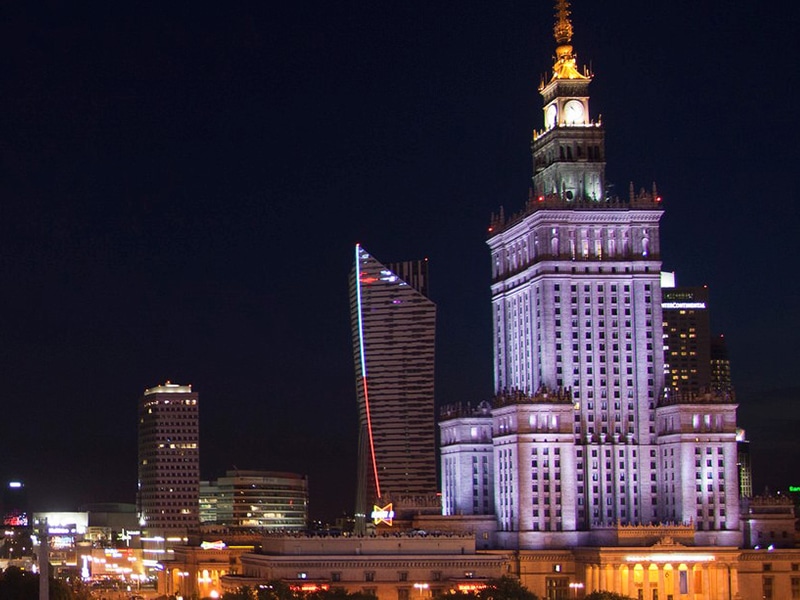
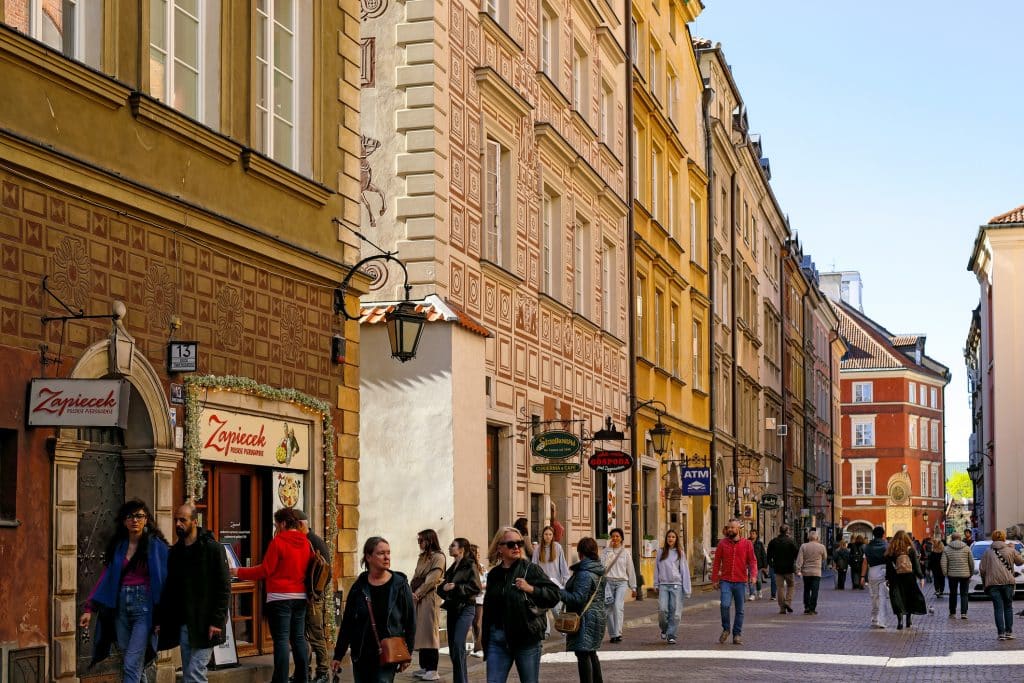
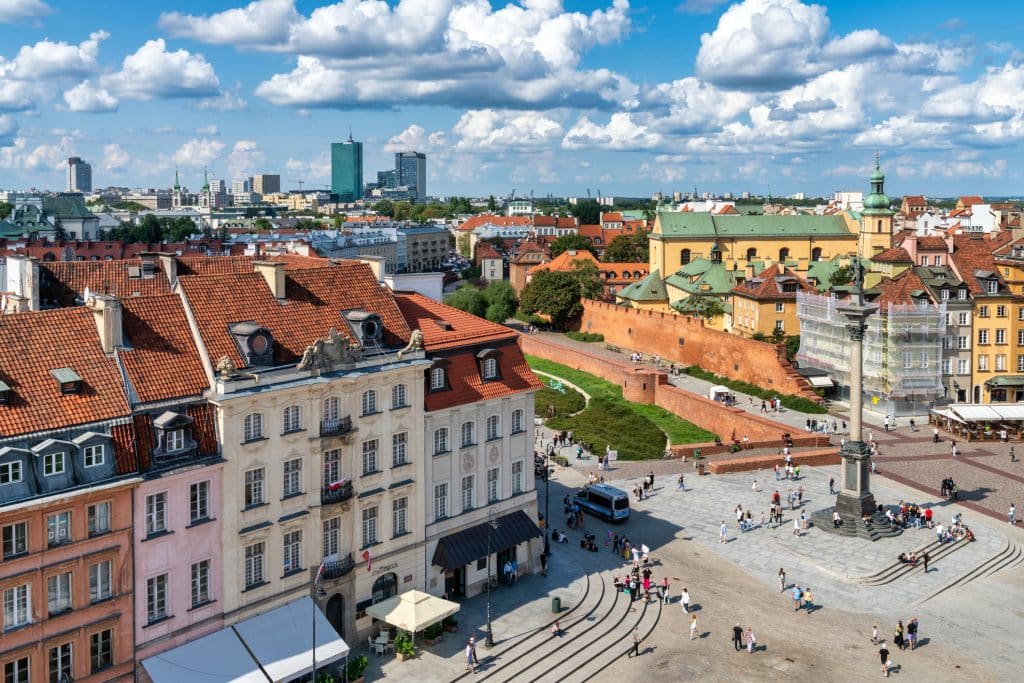
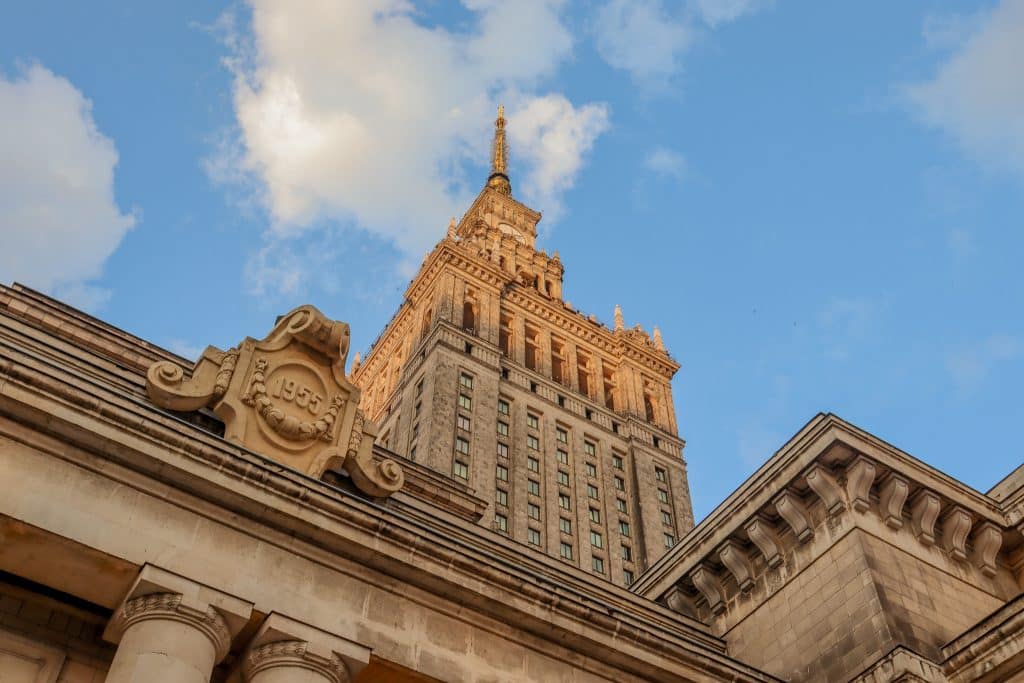
Warsaw serves as the primary academic base for SRAS programs in Central & Eastern Europe. As Poland’s political, economic, and educational center, the city brings together universities, museums, cultural institutions, government bodies, international organizations, and communities from across Poland and the wider region.
Warsaw is also one of the region’s major transportation hubs, with rail and air connections that make independent travel throughout Poland and neighboring countries relatively easy. This gives students opportunities to explore Central & Eastern Europe beyond their primary study location.

Explore Poland
Explore destinations beyond Warsaw that highlight different dimensions of Poland’s history, culture, landscape, and contemporary society.

Kraków
Poland’s former royal capital brings together medieval and Renaissance heritage, Jewish history, wartime occupation, and contemporary cultural life. Its historic center, universities, museums, and memorials offer perspectives on Polish identity, memory, and European history.
-
Gdańsk
Gdańsk’s Baltic setting has shaped centuries of trade, cultural exchange, and political change. The city connects Polish and German history, the outbreak of World War II, and the rise of Solidarity, offering perspectives on war, resistance, democracy, and Poland’s maritime identity.

Wrocław
Wrocław reflects the shifting borders and populations that have shaped Central Europe. Once the German city of Breslau, it became Polish after World War II, offering perspectives on displacement, reconstruction, historical memory, and the creation of new urban identities.

Łódź
Łódź grew rapidly as a center of textile manufacturing, shaped by Polish, Jewish, German, and Russian communities. Its factories, neighborhoods, and cultural institutions offer perspectives on industrialization, migration, multiculturalism, and post-industrial urban change.

Białystok / Podlasie
Białystok and the surrounding Podlasie region reflect Poland’s eastern borderland and its history of cultural, linguistic, and religious diversity. Polish, Belarusian, Jewish, Orthodox, Catholic, and other traditions offer perspectives on minority identity, memory, and regional life.

Tatras & Podhale
The Tatras and surrounding Podhale region reveal how mountain geography has shaped communities and cultural traditions in southern Poland. Highland culture, distinctive architecture, tourism, and protected landscapes offer perspectives on regional identity, environment, and development.


Programs in Poland

Spring Break Warsaw: Ukrainian Language Intensive
Spend spring break in Warsaw with intensive Ukrainian language study and cultural experiences exploring the city and its Ukrainian community.
Winter Break Warsaw: Ukrainian Language Intensive
Spend winter break in Warsaw with intensive Ukrainian language study and cultural experiences exploring the city and its Ukrainian community.

Warsaw: Belarusian Studies
Build on your Slavic language skills while exploring Belarusian culture, identity, and contemporary society in Warsaw and Podlasie.

Warsaw: Security and Society Summer School
Multi-faceted study of global security threats and a research internship at the Terrorism Research Center
Warsaw: Polish Language
Study Polish in Warsaw, using the language in daily life while engaging with culture, institutions, and contemporary society.
Warsaw: Ukrainian Language
Study Ukrainian in Warsaw, where a growing Ukrainian community brings the language into daily life across a dynamic European city.
Warsaw: Security & Diplomacy–CEE Perspectives
Study security and diplomacy in Warsaw after intensive Polish in Warsaw or Russian in Riga.