Estonia combines a distinctly Baltic historical experience with strong linguistic and cultural connections to Finland and the Nordic region. Estonian is a Finnic language closely related to Finnish, while the country’s substantial Russian-speaking population adds another dimension to questions of language, identity, citizenship, and education.
Since restoring independence in 1991, Estonia has become known for digital government, technology, and the integration of digital services into everyday life. These developments exist alongside medieval and early modern heritage, Soviet legacies, and contemporary debates surrounding historical memory, security, and the information environment.
While SRAS programs are not currently based in Estonia, academic travel from Latvia allows students to experience the country directly and compare its approaches to language, technology, governance, identity, and security with those of its Baltic neighbors.
Estonia in the Baltics
Estonia is the northernmost of the three Baltic states, with particularly close linguistic, cultural, and economic ties to Finland and the Nordic region. At the same time, its shared history with Latvia and Lithuania, membership in the European Union and NATO, and border with Russia place it firmly within many of the political and security questions facing the Baltics.
Estonia’s approaches to digital governance, cybersecurity, language policy, education, and integration provide useful points of comparison with its Baltic neighbors. Its experience illustrates how countries with shared twentieth-century histories have developed different institutions and policies in response to contemporary social and security challenges.
Explore Estonia

Tallinn
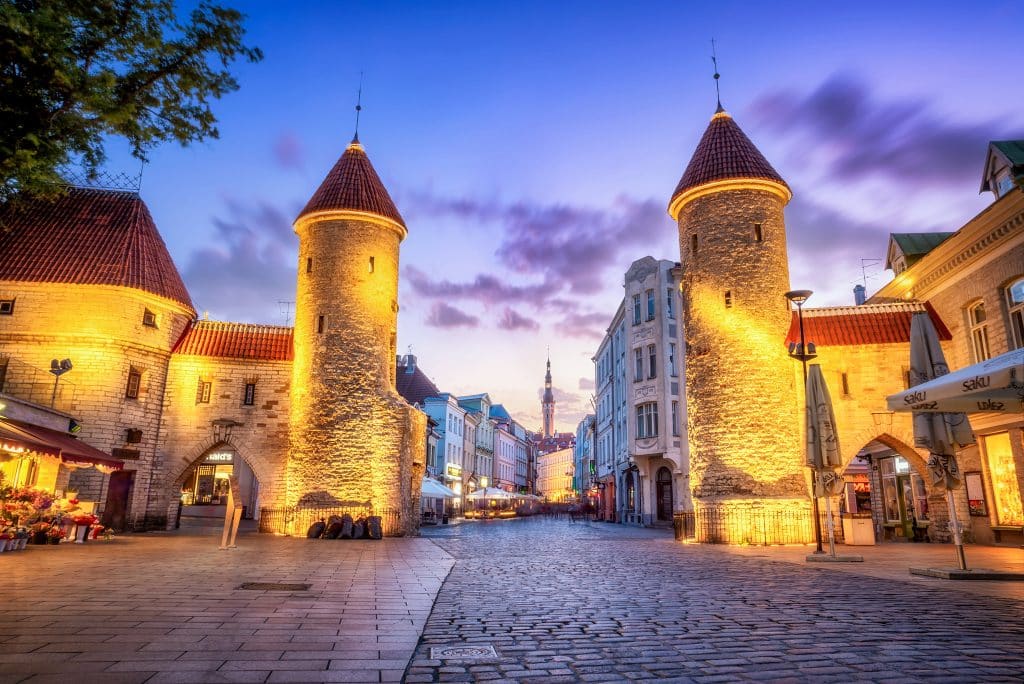
Explore Estonia’s capital through its medieval heritage, digital government, and contemporary institutions. Tallinn offers perspectives on technology, governance, historical memory, and the security challenges facing Estonia and the wider Baltic region.

Narva
On Estonia’s border with Russia, Narva offers a striking perspective on language, identity, citizenship, and security. Its predominantly Russian-speaking population and borderland setting make the city especially relevant to understanding contemporary Estonia.

Tartu
Home to Estonia’s oldest university, Tartu has played a central role in the country’s intellectual and cultural life. Explore the development of Estonian language and national identity alongside a contemporary university city known for research and education.

Paldiski
Once a closed Soviet military town and nuclear submarine training center, Paldiski connects Estonia’s Soviet past with contemporary questions of security and infrastructure. Its port and coastal setting also reveal the continuing strategic importance of the Baltic Sea.

Lahemaa
Estonia’s oldest national park combines forests, wetlands, coastline, fishing villages, historic manor estates, and traces of Soviet military activity. Lahemaa reveals how landscape, rural history, cultural heritage, and environmental preservation intersect in Estonia.
-
Saaremaa
Estonia’s largest island reflects centuries of life shaped by the Baltic Sea. Its maritime traditions, island culture, historic fortifications, and strategic location offer perspectives on how geography has shaped trade, defense, and cultural life.


Programs that include Estonia

Riga: Baltic Security and the Information Environment
Examine information warfare, media systems, and digital governance on NATO’s frontier while developing Russian language skills in the Baltic region.