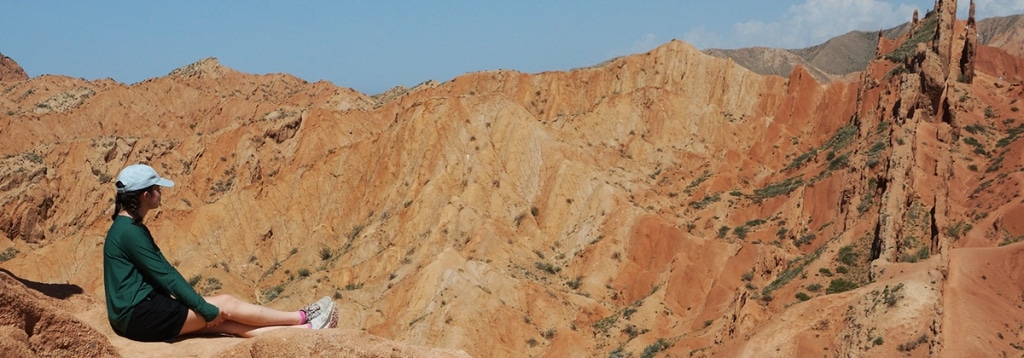
Kyrgyzstan occupies a distinctive position within Central Asia. Mountain ranges cover much of the country, shaping settlement, transportation, economic life, and relationships among communities, while its location between Kazakhstan, Uzbekistan, Tajikistan, and China places it within many of the trade, migration, environmental, and political relationships connecting the wider region.
Nomadic traditions, Islamic heritage, Russian and Soviet influences, and post-independence nation-building have all contributed to contemporary Kyrgyz society. Kyrgyz and Russian are both widely used, while questions of language, migration, economic development, identity, and political change remain visible in everyday life.
Kyrgyzstan’s geography also brings environmental questions into particularly sharp focus. Mountains, glaciers, rivers, and Lake Issyk-Kul are closely tied to agriculture, energy, tourism, and regional water systems, making the country especially useful for exploring relationships among environment, development, and society.
Kyrgyzstan in Central Asia
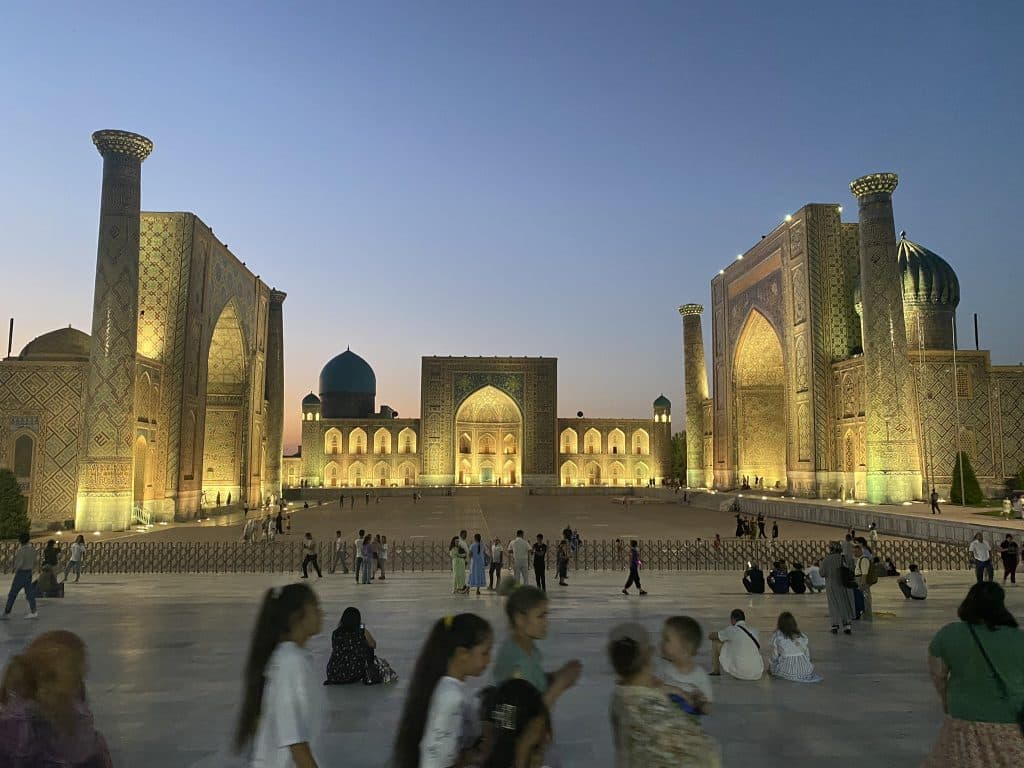
Kyrgyzstan’s location places it within many of the relationships that bind Central Asia together. Trade and migration connect it closely with Kazakhstan and Russia; shared water systems link its mountain environment with downstream communities across the region; and its borders with Uzbekistan, Tajikistan, and China place it along important regional transportation and economic routes.
As a relatively small state surrounded by larger economies and regional powers, Kyrgyzstan also provides valuable perspectives on how Central Asian countries navigate economic dependence, regional cooperation, and relationships with Russia, China, Europe, Turkey, and other international partners.
Kyrgyzstan’s political development and comparatively active civil society also distinguish it from many of its neighbors and provide another perspective on political and social change within Central Asia.

Study in Bishkek
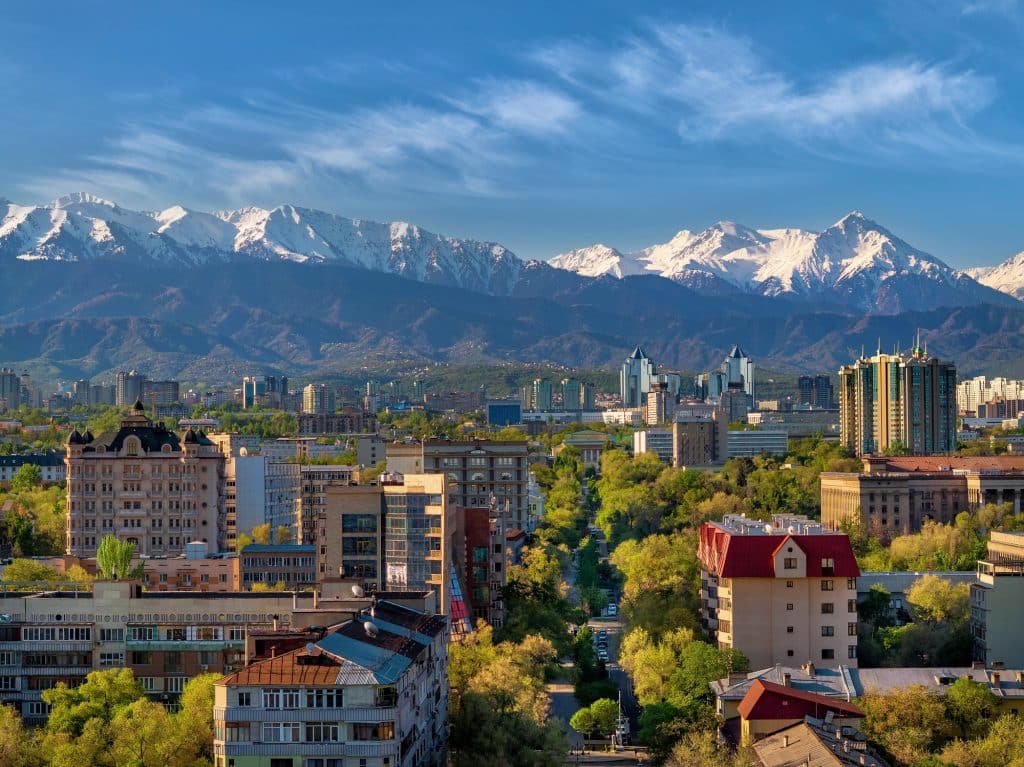
Bishkek serves as the primary academic base for SRAS programs in Central Asia. The capital brings together universities, cultural institutions, markets, public spaces, and communities from across Kyrgyzstan and the wider region, while providing convenient access to destinations throughout the country and neighboring Kazakhstan.

Explore Kyrgyzstan
Explore destinations beyond Bishkek that highlight different dimensions of Kyrgyzstan’s history, culture, landscape, and contemporary society.

Issyk-Kul
Surrounded by the Tian Shan mountains, Issyk-Kul is central to Kyrgyzstan’s geography, economy, and cultural life. Lakeside communities, tourism, agriculture, and environmental pressures provide perspectives on the relationship between natural resources, development, and local livelihoods.

Osh
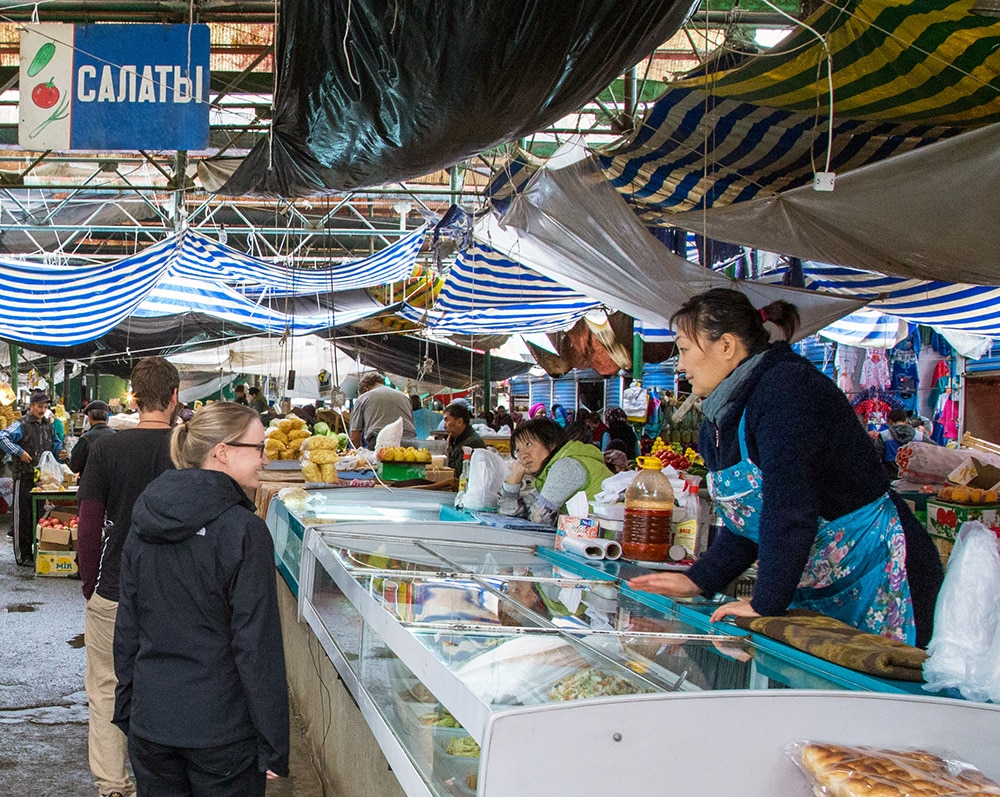
One of Central Asia’s oldest cities, Osh reflects centuries of trade, migration, and cultural exchange in the Ferghana Valley. Its markets, sacred sites, and diverse communities offer perspectives on Islam, regional identity, cross-border connections, and life in southern Kyrgyzstan.

Karakol
At the eastern end of Issyk-Kul, Karakol reflects Kyrgyzstan’s cultural and religious diversity through its Russian imperial history, Dungan mosque, Orthodox cathedral, and lively market. The city also serves as a gateway to mountain communities and the eastern Tian Shan.

Song-Kul
High in the mountains of central Kyrgyzstan, Song-Kul offers insight into pastoral traditions and the continued importance of seasonal grazing. Yurt stays, livestock, and summer communities provide a window into how nomadic heritage intersects with contemporary rural life.

Sary-Chelek Biosphere Reserve
Set in the western Tian Shan, Sary-Chelek protects mountain lakes, forests, meadows, and exceptionally diverse ecosystems. The UNESCO Biosphere Reserve offers a setting for exploring biodiversity, conservation, tourism, and relationships between communities and protected landscapes.

Burana
Burana preserves the remains of Balasagun, a major medieval city along the Silk Road. Its minaret, archaeological remains, and stone balbals provide a window into the Turkic and Islamic history of the Chüy Valley and the trade and cultural exchange that once connected Central Asia.


Programs in Kyrgyzstan

Bishkek: Central Asian Studies
Travel through Central Asia while studying geopolitics, strategic balancing, and energy systems, and using Russian in real-world regional contexts.

Bishkek: Russian as a Second Language
Study Russian in Bishkek, one of Central Asia’s most Russian-speaking cities, with daily use reinforcing intensive classroom instruction.
Central Asia: Connectivity, Power, and Regional Strategy
Explore connectivity, energy, and regional strategy across Central Asia through immersive, multi-country field study.