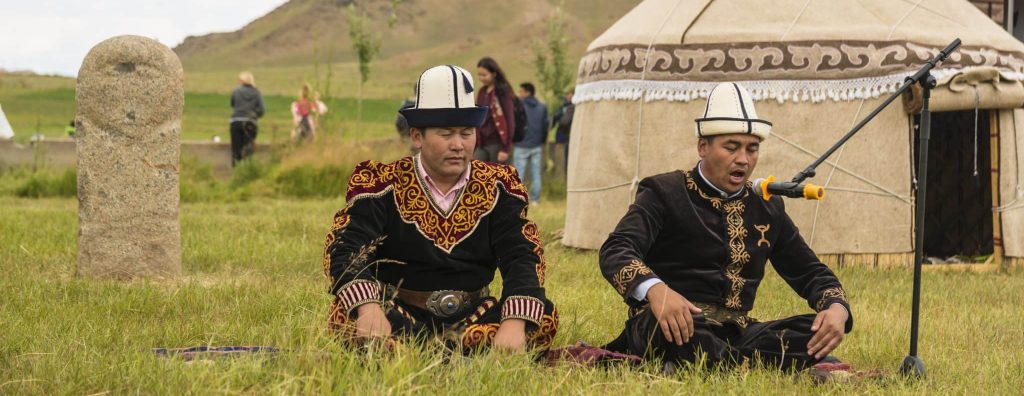
Central Asia occupies a pivotal position at the heart of Eurasia. Long connected by the Silk Roads and later incorporated into the Russian Empire and Soviet Union, the region today sits at the intersection of relationships with Russia, China, Europe, the Middle East, and South Asia. Energy resources, water, transportation networks, migration, and trade continue to link its countries to one another and to the wider world.
Kazakhstan, Kyrgyzstan, Uzbekistan, Tajikistan, and Turkmenistan share important historical experiences while differing significantly in geography, resources, population, political systems, and economic development. Across the region, nomadic and settled traditions, Islamic heritage, Soviet legacies, and contemporary nation-building have shaped distinct languages, identities, and societies.
These similarities and contrasts make Central Asia particularly valuable for students interested in language, international relations, development, environmental issues, history, anthropology, and political science. Rapid urbanization, infrastructure development, demographic change, and shifting international relationships are transforming the region while longstanding cultural traditions remain highly visible in everyday life.
Central Asia in the Eurasian Corridor
Within the Eurasian Corridor, Central Asia forms a strategic bridge between Europe and East Asia and between Russia and the regions to its south. Historic trade routes are being reshaped through new railways, roads, pipelines, and other infrastructure connecting China, the Caspian, the Caucasus, and European markets. At the same time, shared water systems, energy resources, migration, and trade create important relationships among the Central Asian states themselves.
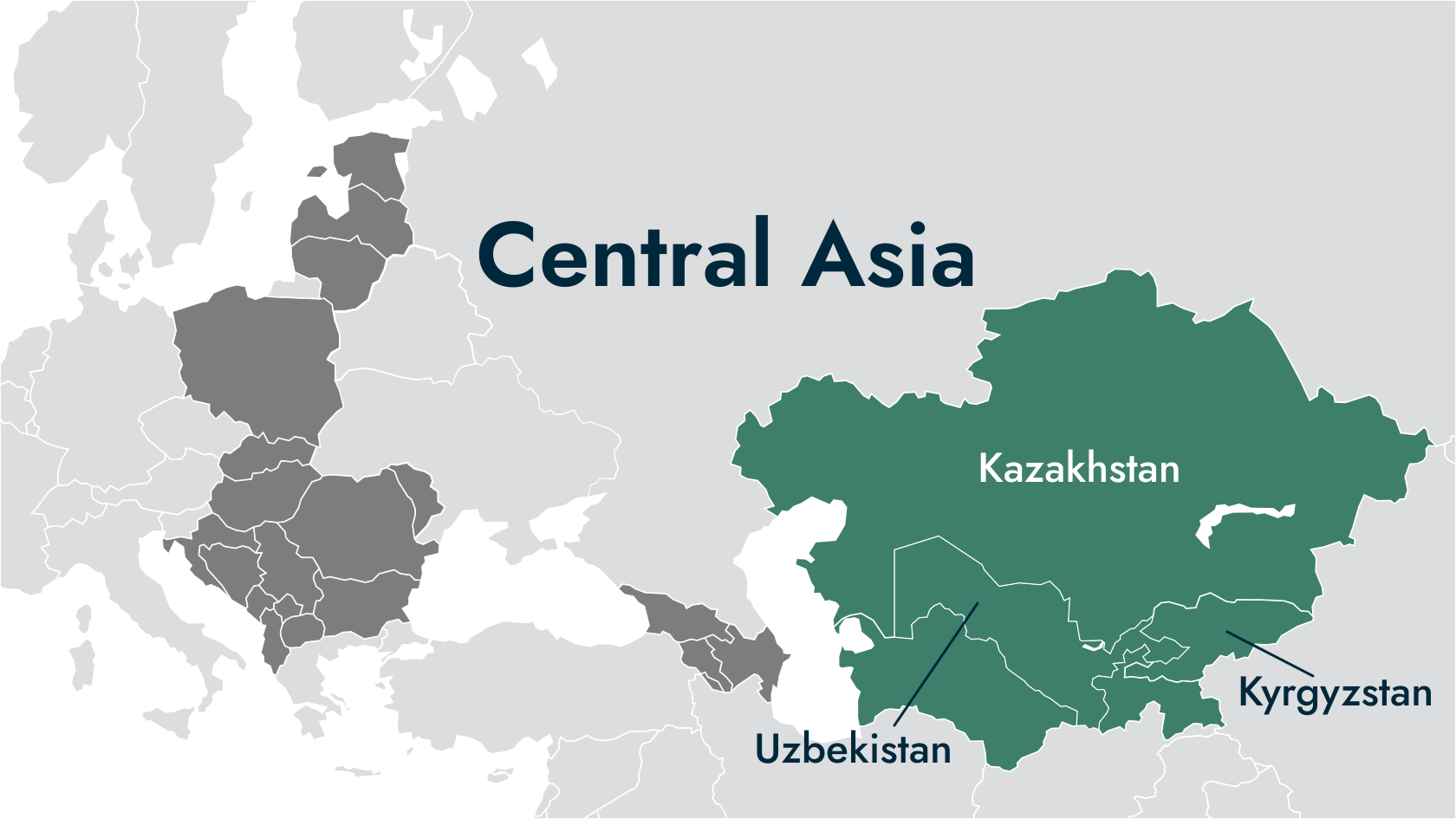
The region’s countries navigate relationships with larger powers while pursuing their own economic and foreign policy priorities. Russia remains an important political, economic, and cultural presence; China has become a major trade and investment partner; and relationships with Europe, Turkey, the Middle East, South Asia, and neighboring states continue to expand. These overlapping relationships make Central Asia particularly important for understanding strategic balancing, regional connectivity, and the changing political and economic geography of Eurasia.
Countries of Central Asia
Kyrgyzstan
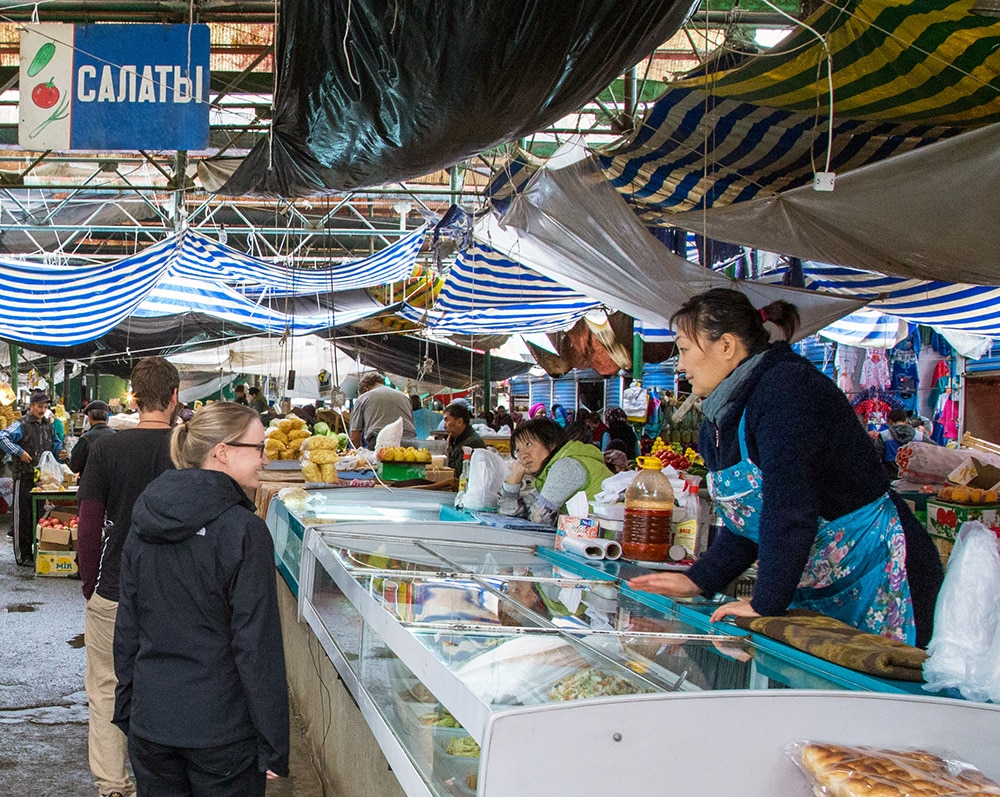
SRAS’s primary study base in Central Asia, Kyrgyzstan provides perspectives on language, nomadic heritage, environmental issues, development, and regional affairs while offering access to the wider region.
Kazakhstan
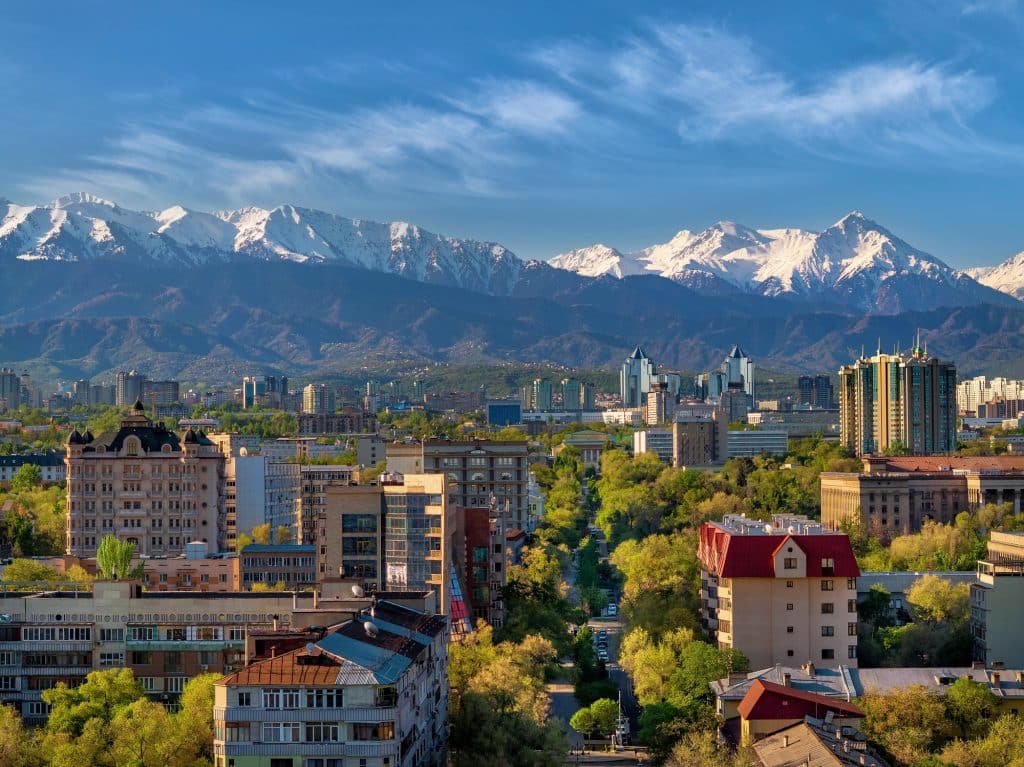
Examine economic development, energy, urban transformation, and Kazakhstan’s role as Central Asia’s largest economy and an important link between Europe and Asia.
Uzbekistan
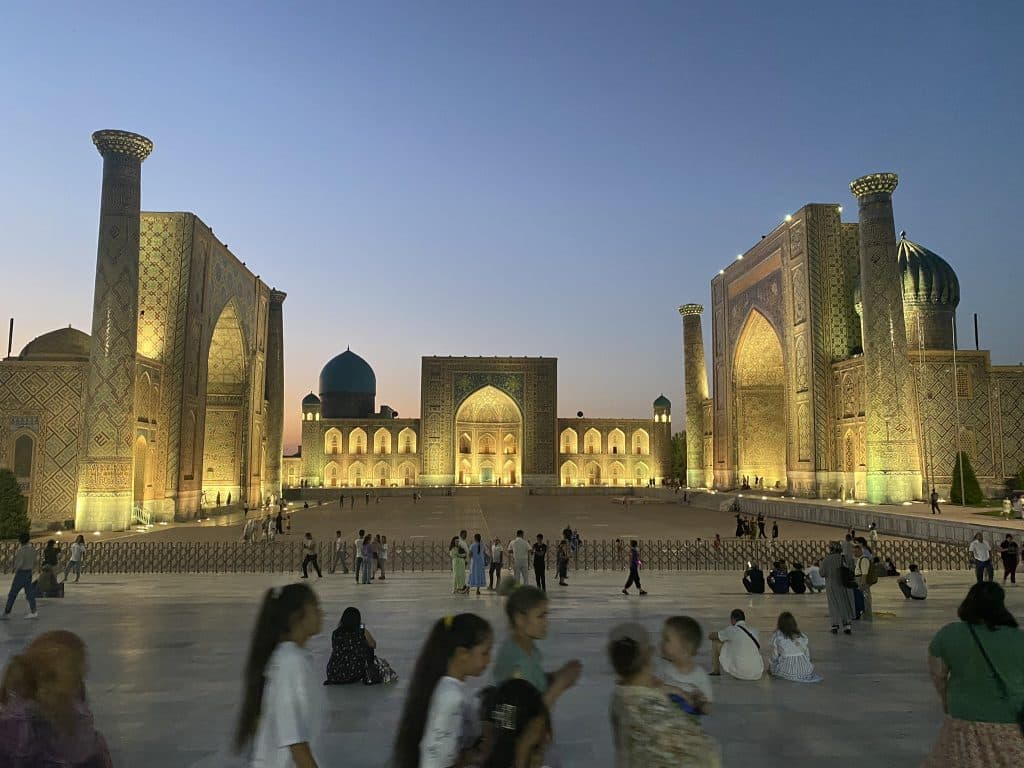
Explore the historical legacy of the Silk Roads alongside contemporary questions of economic reform, cultural heritage, and regional cooperation.
Learning Across the Region
Central Asia can be explored through multiple academic perspectives, with language, identity, history, environment, development, and international relations often intersecting in ways that deepen understanding of the region.
Language
Study Russian or Kyrgyz while exploring multilingual societies where language reflects identity, history, migration, and regional relationships.
International Relations & Security
Examine regional diplomacy, economic development, infrastructure, environmental challenges, and relationships with regional and global powers.
Identity & Society
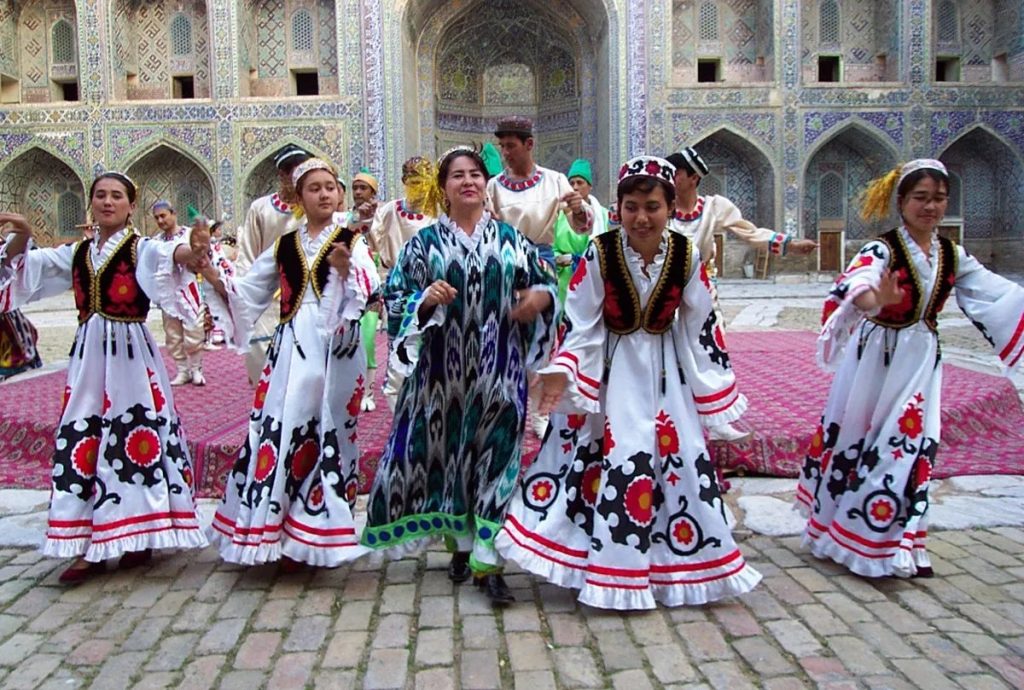
Explore migration, ethnicity, religion, language, and cultural change across one of the world’s most diverse regions.
History & Culture
Connect the historical legacy of the Silk Roads, nomadic traditions, and the Soviet period to contemporary communities, institutions, and cultural life.
Programs in Central Asia

Bishkek: Central Asian Studies
Travel through Central Asia while studying geopolitics, strategic balancing, and energy systems, and using Russian in real-world regional contexts.

Bishkek: Russian as a Second Language
Study Russian in Bishkek, one of Central Asia’s most Russian-speaking cities, with daily use reinforcing intensive classroom instruction.

Spring Break: Navruz in Uzbekistan
Join SRAS for Navruz in Uzbekistan! This 9-day trip will introduce you to modern Uzbekistan before taking you back in time, immersing you in the art, architecture, culture, and history of this very unique civilization. See for yourself the heritage of the Silk Road, Great Game,…
Central Asia: Connectivity, Power, and Regional Strategy
Explore connectivity, energy, and regional strategy across Central Asia through immersive, multi-country field study.