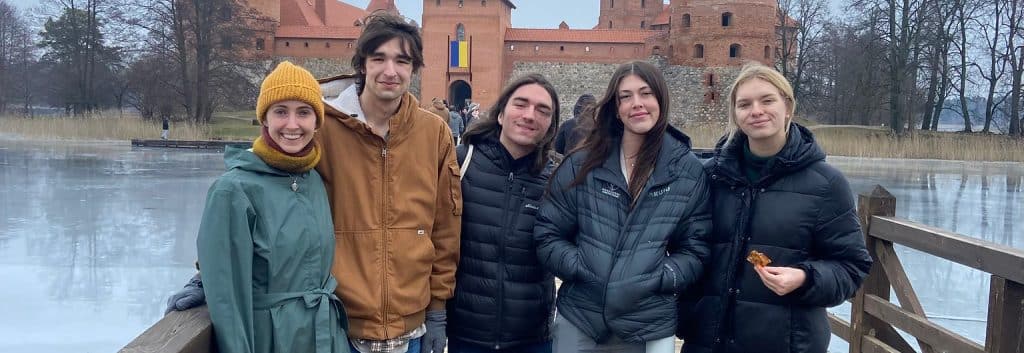
Lithuania’s history connects the Baltic region with Central & Eastern Europe. The medieval Grand Duchy of Lithuania and later Polish-Lithuanian Commonwealth extended across a large part of the region, leaving historical and cultural relationships that distinguish Lithuania from its Baltic neighbors.
The twentieth century brought independence, Soviet and Nazi occupations, the Holocaust, renewed Soviet rule, and the restoration of independence in 1990. These experiences remain visible in debates surrounding historical memory and national identity, as well as in Lithuania’s contemporary relationships with Poland, Belarus, Ukraine, Russia, and the wider European region.
Today, Lithuania is a member of the European Union and NATO and plays an active role in questions of regional security and European affairs. SRAS students may encounter Lithuania through academic travel or independent exploration while studying elsewhere in the Baltics.
Lithuania in the Baltics
Lithuania is the southernmost Baltic state and has particularly strong historical and cultural connections with Poland and Central & Eastern Europe. Its population is also less linguistically Russian than those of Latvia and Estonia, contributing to different approaches to language, citizenship, and post-Soviet identity.
At the same time, Lithuania shares many of the security concerns of its Baltic neighbors. Its borders with Belarus and Russia’s Kaliningrad region, proximity to the Suwałki corridor, and membership in the European Union and NATO place the country within some of the most closely watched security questions along Europe’s northeastern flank.
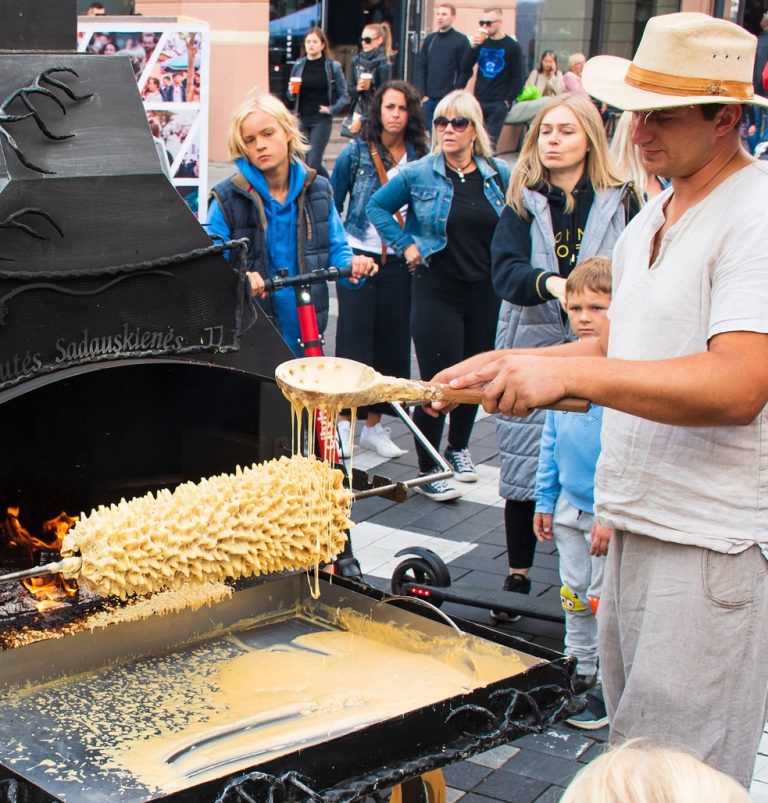
Explore Lithuania
These destinations highlight different dimensions of Lithuania’s history, culture, landscape, and contemporary society and can inform independent travel or future faculty-led programming.

Vilnius
Lithuania’s capital reflects centuries of political, religious, and cultural exchange. Explore the legacy of the Grand Duchy, Polish and Jewish heritage, Soviet rule, and independence while examining how these histories continue to shape national identity and contemporary Lithuania.

Kaunas
Lithuania’s interwar capital offers perspectives on nation-building, modernism, and cultural identity between the world wars. Its architecture, museums, and urban history trace a period of independence and modernization whose legacy remains visible in the city today.

Klaipėda
Lithuania’s principal port connects the country to the Baltic Sea and a history shaped by German, Lithuanian, and maritime influences. Explore how trade, shifting borders, port development, and regional connections have shaped this distinctive coastal city.

Curonian Spit
This narrow peninsula of dunes, forests, fishing settlements, and coastline reveals a landscape shaped by both natural forces and human intervention. Explore environmental preservation, maritime traditions, tourism, and the long relationship between communities and the Baltic Sea.

Hill of Crosses
Thousands of crosses near Šiauliai have transformed a pilgrimage site into a powerful symbol of faith, memory, and national identity. Repeated Soviet attempts to remove the crosses add another layer to understanding religion, resistance, and historical memory in Lithuania.

Visaginas / Ignalina
Built around the Ignalina Nuclear Power Plant, Visaginas offers a striking window into Soviet urban planning, energy policy, and post-Soviet change. Its multilingual community and nuclear legacy raise questions of identity, energy security, and Lithuania’s changing orientation.


Explore Lithuania with SRAS
While SRAS does not currently offer programs based in Lithuania, students may experience the country through academic travel incorporated into programs elsewhere in the region or through independent travel during their time abroad. SRAS can also work with faculty to develop custom programs that include Lithuania as a destination.
