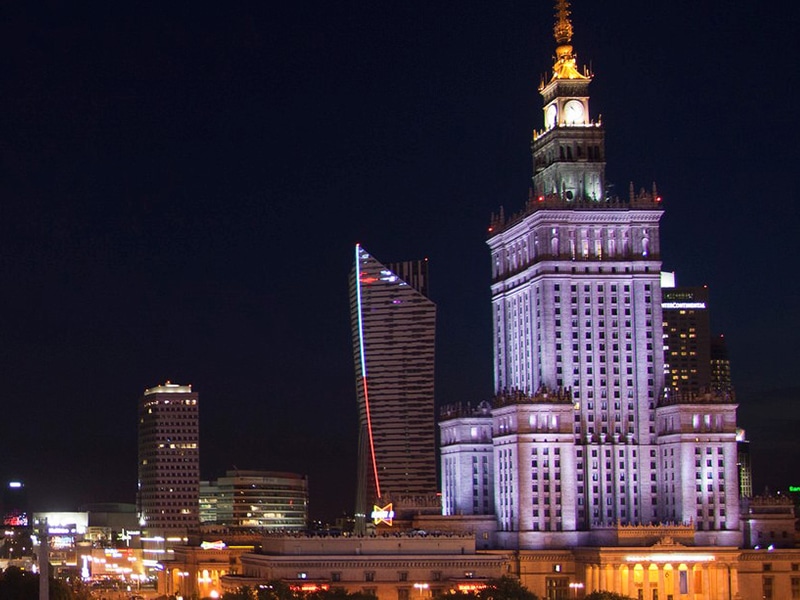
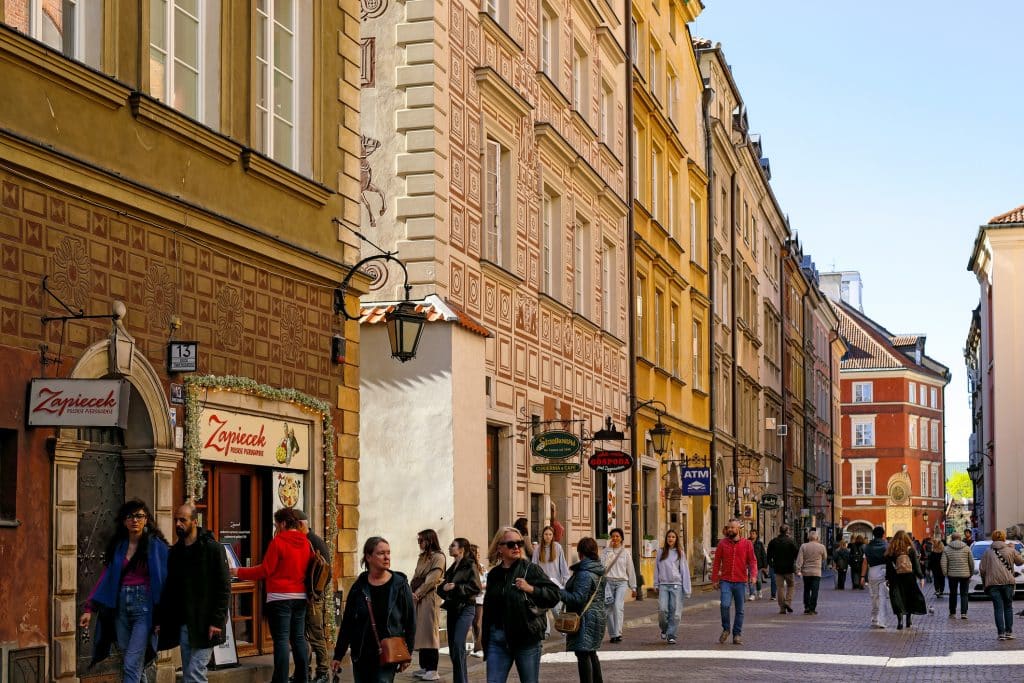
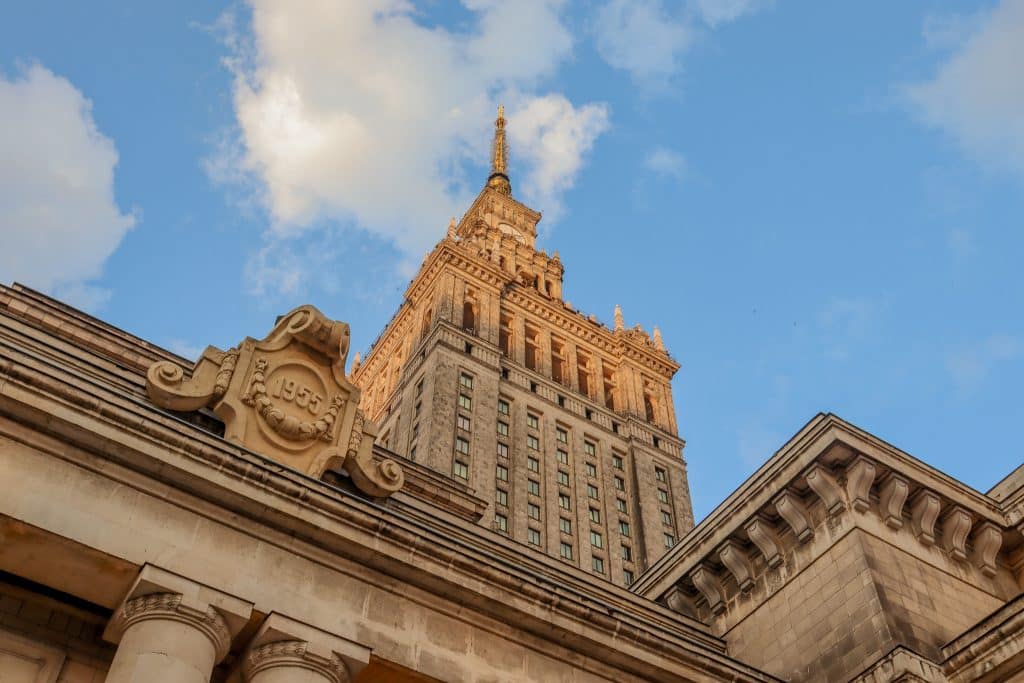
Poland’s history and geographic position make Warsaw a particularly relevant setting for examining how security threats develop, overlap, and change.
Security can be studied almost anywhere, but place changes how it is understood. In Poland, questions of sovereignty, borders, alliances, and relations with neighboring powers are not merely theoretical. They have repeatedly shaped the country’s territory, political institutions, and place within Europe.
Warsaw brings that history together with the security questions facing Europe today. Poland is a member of NATO and the European Union, borders both Ukraine and Belarus, and plays an important role in European defense and regional diplomacy. From this setting, students can engage with regional experts and examine European security in its historical and contemporary context—from military defense and international alliances to terrorism, disinformation, cyber threats, and artificial intelligence.
Security Shaped by History and Geography
Poland’s sensitivity to security is grounded in its historical experience. At the end of the eighteenth century, Poland was partitioned among Russia, Prussia, and Austria and disappeared as a sovereign state for 123 years. After regaining independence in 1918, Poland was invaded by Nazi Germany and the Soviet Union in 1939. The country then endured occupation, the Holocaust, and other mass killings, followed by major territorial shifts and large-scale population displacement.

After the war, Poland remained within the Soviet sphere for more than four decades. Its democratic transition beginning in 1989 was followed by membership in NATO and the European Union, anchoring the country within institutions that remain fundamental to its security and foreign policy.
This history helps explain why territorial defense, national independence, collective security, and the reliability of alliances carry particular weight in Poland. Russia’s war against Ukraine has made these questions especially relevant, drawing renewed attention to Poland’s position on NATO’s eastern flank and its role in the wider European security order.
What Security Means Today
Military defense remains central to European security, particularly for countries located close to the war in Ukraine. Yet contemporary conflict extends beyond armies and territorial borders. It can also involve cyberattacks, disinformation, economic pressure, infrastructure, migration, and other means of influencing governments and societies.
Poland provides a useful setting for examining how these different dimensions intersect. Its position within NATO and the European Union, proximity to Russia’s war against Ukraine, and borders with Ukraine and Belarus place conventional defense alongside questions of information, technology, border security, and regional cooperation. Studying security from Warsaw therefore allows students to consider not only individual threats, but also the wider architecture through which European states identify and respond to them.
Changing Threats: From Cold War Terrorism to AI
Terrorism offers one example of how security threats—and the ways we understand them—change over time. In the United States, contemporary perceptions of terrorism have been shaped heavily by the attacks of September 11, 2001, and the conflicts that followed. The subject is therefore often associated primarily with the Middle East and religious extremism.

That association can obscure an important part of its history. During the 1970s and 1980s, Europe was one of the principal arenas of terrorist violence. Separatist organizations, revolutionary left-wing groups, far-right extremists, and organizations connected to conflicts outside Europe carried out bombings, assassinations, kidnappings, and hijackings across the continent.
This violence developed within the larger political and ideological divisions of the Cold War. Warsaw was not an epicenter of terrorist activity, but Poland’s experience within the Eastern Bloc and its subsequent transition into NATO and the European Union provide a valuable Central & Eastern European perspective on how security systems and international cooperation have changed.
Artificial intelligence represents a new stage in the evolution of both threats and responses. Terrorist and extremist organizations can use AI to produce propaganda, target audiences, translate content, manipulate images and video, and extend the reach of relatively small networks. Governments and security institutions can use it to analyze information, identify patterns, monitor online activity, and assess potential threats.
The implications extend beyond terrorism. AI can also play a role in cyber operations, military planning, intelligence analysis, disinformation, and the protection of critical systems. Understanding its significance therefore requires more than examining the technology itself. Students must also consider how AI may alter the capabilities of different actors and affect the balance among states, institutions, and nonstate groups.
Why Warsaw?
Warsaw provides a historically and geographically relevant base for expert-led study of these questions. Lecturers working in security, diplomacy, media, technology, and regional affairs can connect individual topics to the wider European context and to developments across Central & Eastern Europe.

This perspective is particularly valuable for students accustomed to approaching security primarily through US policy or through regions associated with active conflict. Studying in Warsaw introduces another point of reference: a country whose historical experience has made security a persistent concern and whose present position places it near the center of debates about Europe’s defense and strategic direction.
Studying Security with SRAS in Warsaw
The Security and Society Summer School is a flagship SRAS program and one of our longest-standing opportunities for students to study contemporary security. Expert-led courses address terrorism, media, artificial intelligence, diplomacy, and international cooperation from European and regional perspectives. Through an integrated internship with the Terrorism Research Center, students complete an individual research project with the aim of developing work that may be considered for publication.
Warsaw also offers a strong base for faculty-led programming. Such programs have often approached security through the history of the Second World War and the Holocaust—subjects for which Poland provides essential context. That foundation can be extended into contemporary questions involving NATO, the war in Ukraine, terrorism, disinformation, emerging technologies, and the changing security architecture of Europe. Programs can retain a historical focus, examine present-day concerns, or consider how earlier experiences continue to shape current security priorities.
Across these formats, Warsaw is more than the city in which the program takes place. Poland’s history and geographic position help explain why security remains so consequential and provide students with a stronger foundation for understanding how the European security environment continues to change.
Experience Poland!
SRAS has programs for individual students and supports faculty-led programs.