Program Design Models

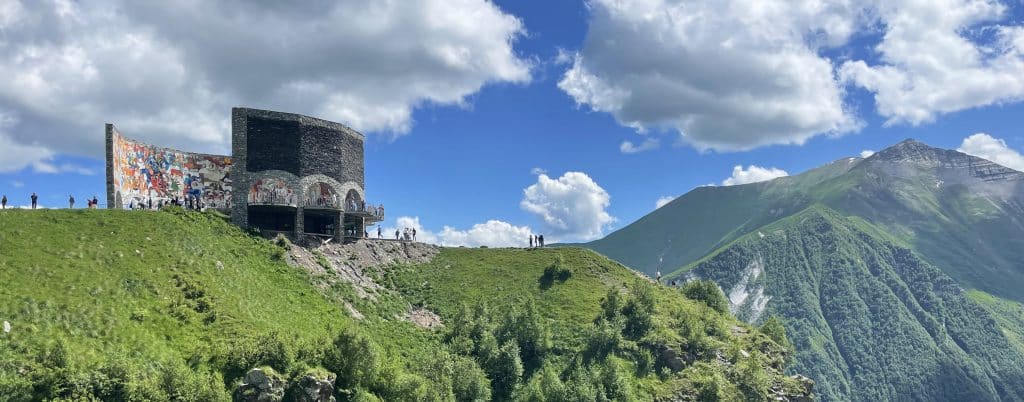
The Russia–Georgia Friendship Monument is a large, curved stone and concrete arch built in 1983. Located on a mountain ridge along the Georgian Military Highway between Gudauri and the Jvari Pass, it features a vibrant, wrap-around interior tile mural depicting scenes from Georgian and Russian history

Faculty-led programs can take many forms depending on the course, students, timeframe, and academic goals. Some are built around a central academic theme, while others integrate language study, applied research, or intensive experiential learning. Programs may focus deeply on a single location or use travel across multiple destinations to explore a question from different regional perspectives.

The models below provide starting points rather than fixed templates. Each can be adapted to the faculty member’s academic goals, institutional requirements, and student audience, and elements from different models can be combined within a single program.

In This Guide:

Thematic Academic Programs

These programs are organized around a central academic question or theme and are designed as field-based extensions of your course. Common areas of focus include security and geopolitics, identity and society, media and information environments, and historical memory.

Students study archeology in the field as part of a wider course on Armenian identity.

How It Works

Programs may be based in one primary location or incorporate regional travel where it supports the academic focus. Content can combine guest lectures, site visits, workshops, and structured discussion, allowing students to examine course themes through direct engagement with the region.

Common Program Elements:

  • Guest lectures with local scholars and subject-matter experts
  • Visits to government institutions, NGOs, and cultural organizations
  • Guided exploration of key historical and cultural sites, often paired with workshops
  • Regional travel to provide comparative perspective (as appropriate)
  • Group discussions, reflection sessions, and short analytical assignments

Academic Fit

This model works well across a wide range of disciplines, including international relations, political science, history, sociology, anthropology, geography, environmental studies, and area studies. It is ideal for courses organized around a central question or theme that can be explored through direct engagement with the region.

Language-Integrated Programs

These programs combine a faculty-led course with language study as one component of a broader academic experience. This can broaden participation across disciplines while providing a clear pathway for students pursuing Russian or other regional languages.

Students in Georgia learn to print Georgia's unique letters.

How It Works

Students participate in the faculty-led course as a cohort and may also enroll in language study or, where appropriate, a second thematic course offered alongside the program. Language instruction can be coordinated according to student proficiency, program structure, and available SRAS courses.

Common Program Elements:

  • Faculty-led course delivered to the full group
  • Optional enrollment in Russian or other regional language courses (by level)
  • Option to include an SRAS-led topical course (in some program designs)
  • Coordinated scheduling to align coursework and program activities
  • Site visits and guest lectures connected to the faculty-led course

Academic Fit

This model is particularly well suited to programs led by faculty in Russian, Slavic, and Eurasian studies who are looking to attract students from related fields such as political science, history, or international relations. It allows a faculty-led course to draw a broader group of students while still supporting those who wish to continue or begin language study alongside the program.

Applied Learning & Research

These programs are built around a specific project, professional activity, or applied output, allowing students to engage directly with the region through structured, hands-on work. Formats may include journalism and reporting projects, collaborative research, conferences, consulting projects, or fieldwork developed with local partners.

Students visit the US embassy in Riga, Latvia.

How It Works

The faculty-led course provides the academic framework for the program, while the applied component—such as a reporting project, conference, collaborative assignment, or fieldwork—shapes the structure of activities on the ground. Programs balance guided instruction with independent or small-group work, often culminating in a final project, presentation, or field-based output.

Common Program Elements:

  • Faculty-led course or seminar providing academic context
  • A defined project, research task, or field-based activity
  • Meetings with local experts, organizations, or collaborators, including workshops
  • Site visits and observation directly tied to the project or fieldwork
  • Time allocated for independent or group work
  • Final presentations, reports, or other project outputs

Academic Fit

This model works well for programs in journalism, media, and communication, as well as courses that incorporate research, fieldwork, or experiential learning. It is also well suited to programs built around conferences, academic exchanges, or collaborative projects with local partners.

Short-Term Educational Programs

These programs emphasize guided exploration, cultural engagement, and direct experience through carefully designed itineraries. Formal coursework may be incorporated where appropriate, but the primary focus is structured learning through travel, site visits, discussion, and engagement with the region.

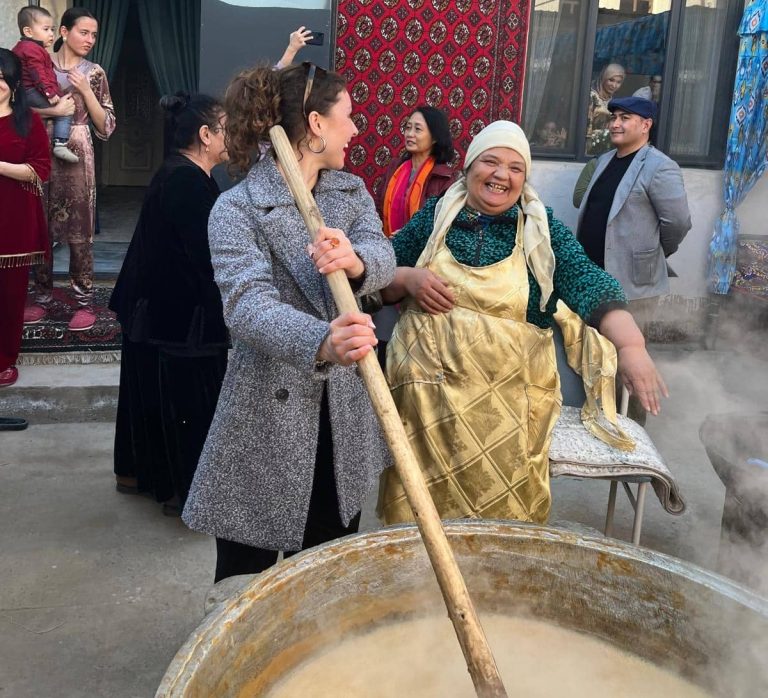
Helping to stir the sumalak, a labor-intensive festival food eaten only for Navruz.

How It Works

Programs are built around a structured itinerary of site visits, cultural activities, and regional travel, with the faculty leader providing context, interpretation, and guidance throughout. While formal coursework is limited or not required, programs are designed to offer meaningful exposure to the region through curated, on-the-ground experiences.

Common Program Elements:

  • Faculty-led travel with ongoing interpretation and context
  • Visits to historical, cultural, and political sites
  • Guided city exploration and cultural activities
  • Regional travel within the program timeframe
  • Informal discussions and group reflection

Academic Fit

This model is well suited to programs designed to introduce participants to a region or theme without the structure of a full academic course. It is often used for alumni travel programs, faculty seminars, lifelong learning initiatives, and other educational travel experiences where accessibility and broad participation are priorities.

Sample Itineraries

The models above provide a framework for program design. Explore sample itineraries (coming soon) to see how these approaches have been adapted across different disciplines, locations, and program lengths.

Let's Build Your Program

Whether you’re adapting an existing course or developing a new program, we can help identify destinations, academic resources, and program structures that support your goals. Start with an idea, a syllabus, or simply a conversation.


Students enjoying the Vadavar festival in Armenia.