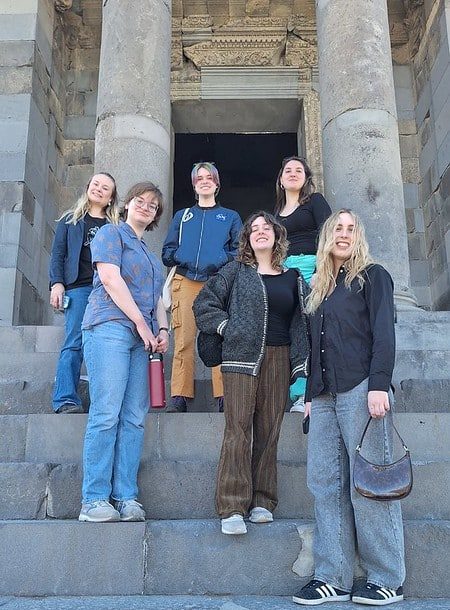
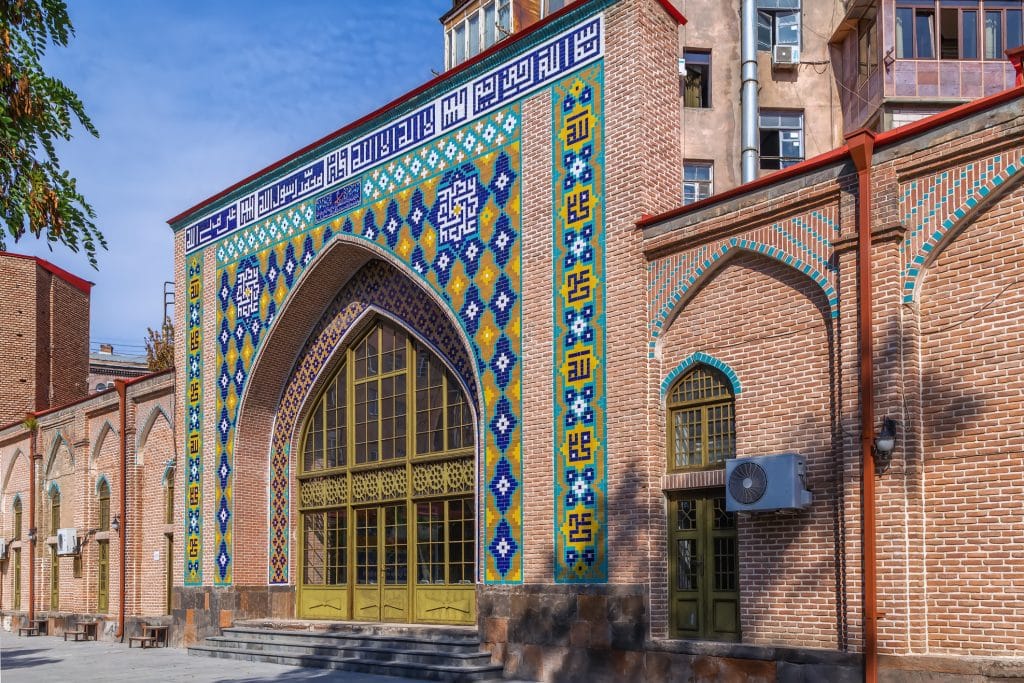
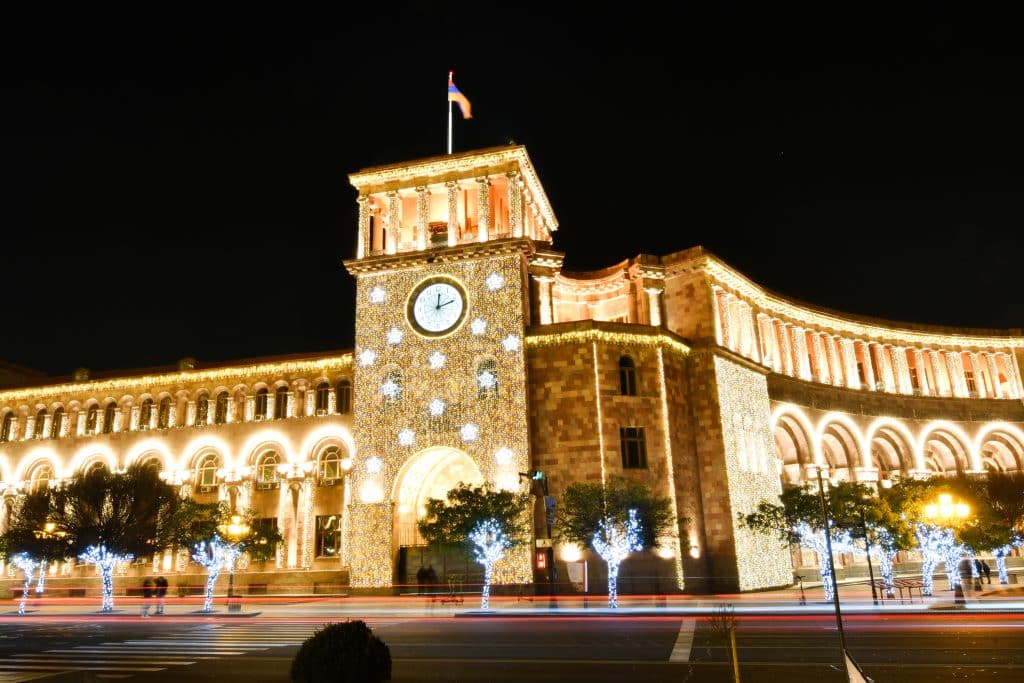
At Khor Virap monastery, visitors photograph Mount Ararat across the Turkish border. In central Yerevan, the Blue Mosque preserves a trace of Persian rule. Russian imperial and Soviet influence is visible in cities, institutions, and infrastructure. Armenia’s history provides much of what visitors come to see—and much of the background needed to understand its politics today.
Four relationships offer a useful way to explore Armenia and the historical forces shaping its position today: those with Turkey, Azerbaijan, Iran, and Russia. Each of these relationships has a different history, but today they are closely intertwined. Together, they make Armenia a compelling setting for studying how borders, historical memory, and security shape a country’s choices.
Table of Contents
Armenia–Turkey: History Across a Visible Border
The hilltop of where Khor Virap is located offers spectacular views of a mountain central to Armenian cultural identity that now stands within a neighboring country. The modern border reflects the wars and settlements accompanying the collapse of the Russian and Ottoman empires. That period transformed both territory and demographics.
The Armenian Genocide is central to this history and the Armenian Genocide Memorial Complex in Yerevan provides essential context for understanding contemporary Armenian views of Turkey. Turkey’s rejection of genocide recognition remains a profound division between the two societies.
Yet the relationship also demonstrates how historical disputes interact with more recent alliances. Turkey closed its land border with Armenia in 1993 in support of Azerbaijan during the first Nagorno-Karabakh war, fought over land that both cultures consider central to their identities and histories. Armenia’s relations with Turkey are further complicated by its conflict with Azerbaijan.
Normalization of relations between Turkey, Azerbaijan, and Armenia all offer increased opportunities for trade, travel, and regional access, but also raise difficult questions of reconciliation. Direct flights and diplomatic contacts show that cooperation can advance while disagreements remain unresolved. Studying the relationship in Armenia allows students to consider both the weight of history and the practical interests driving diplomacy.


Armenia–Azerbaijan: From Soviet Boundaries to Interstate Conflict
In 1923, Soviet authorities established the Armenian-majority Nagorno-Karabakh Autonomous Oblast within Soviet Azerbaijan. As Soviet authority weakened decades later, demands to transfer the region to Armenia developed into a conflict involving rival claims to territory, self-determination, and security.
The first war produced Armenian control of Nagorno-Karabakh and surrounding Azerbaijani districts, as well as extensive displacement. Azerbaijan’s military gains in 2020 changed that balance. Its September 2023 offensive brought the remaining Armenian-controlled territory under Azerbaijani authority, followed by the departure of virtually its entire Armenian population. These successive upheavals are essential to understanding the distrust surrounding negotiations.
Contemporary discussions center on the terms that often define interstate peace: delimiting borders, establishing security, and reopening transport connections. Efforts initiated in August 2025 and subsequent transport planning mark efforts to create a different relationship, although the road to full implementation is still long and difficult.
For students, this offers a concrete case of how internal Soviet boundaries became international frontiers—and how competing historical narratives continue to influence attempts to settle their consequences.


Armenia–Iran: Imperial History and Practical Cooperation
Built under Persian rule, Yerevan’s Blue Mosque is evidence of the city’s place within an earlier political and cultural world.
Much of eastern Armenia passed from Persian to Russian rule following the Treaty of Turkmenchay in 1828, following centuries of Armenian–Persian cultural exchange. Persian manuscripts at the Matenadaran in Yerevan provide another route into studying these connections, extending the subject beyond rulers and treaties to scholarship, language, and the circulation of knowledge.
Today, geography gives the relationship practical significance. Iran provides Armenia with a southern connection, while proposed routes linking Azerbaijan with its Nakhchivan exclave bring transport and sovereignty into the same discussion. These routes would cross southern Armenia, making their operation and oversight important to Iran’s access northward through Armenia. This makes the issue a truly regional concern.
The US-backed TRIPP initiative illustrates these overlapping interests. Its framework affirms Armenian sovereignty and jurisdiction over project areas while seeking to establish regional transit connections. The question of how such arrangements would work helps explain why infrastructure proposals become matters of foreign policy.


Armenia–Russia: Protection and Dependence
Russia’s role in Armenia developed through imperial expansion, Soviet integration, and the security arrangements established after independence. These periods created different relationships, but together they left substantial military, economic, and institutional ties.
After the Soviet collapse, conflict with Azerbaijan and difficult relations with Turkey made Russian security support especially important to Armenia. A Russian military presence and membership in the Collective Security Treaty Organization (CSTO) reinforced that relationship. Dependence also extended into energy and other parts of the economy.
The wars and crises of recent years weakened Armenian confidence in those arrangements. Armenia froze its participation in the CSTO, questioning the value of an alliance that had failed to meet its expectations of protection. This reassessment directly connects the Russian relationship to Armenia’s experience with Azerbaijan.
The resulting choices are difficult precisely because the ties are so extensive. Diversifying security partnerships involves reconsidering institutions and dependencies built over decades. Russian and Soviet history consequently remains relevant to discussions of Armenia’s future, even as the country seeks additional partners.


Studying These Relationships in Armenia
Studying in Armenia brings historical evidence and contemporary debate into the same setting. The physical landscape, museums, and discussions with local experts give students opportunities to connect historical study with the political questions facing the country today. Within Armenia itself, the academic opportunity is already substantial: to examine how the past enters decisions about whom to trust, where to trade, and how to secure a state’s future.
SRAS’s Identity and Conflict semester and Crossroads summer programs place Armenia within a comparative study of the Caucasus. The Iranian Studies program offers a deeper exploration of Persia and contemporary Iran through the lens of Armenia. Custom faculty-led programs can develop these connections further, focusing on history, memory, and politics through sites, collections, and discussions selected around a group’s academic interests.
Experience Armenia!
SRAS has programs for individual students and supports faculty-led programs.