Latvia’s history, multilingual society, and position on NATO’s frontier make Riga a particularly valuable setting for examining how information, identity, and technology shape contemporary security.
Disinformation can come in many forms: false stories circulated online, manipulated images, automated accounts, or influence campaigns directed from abroad. In Latvia, questions about information security are closely connected to language, historical memory, identity, and its relationship with Russia. Information can shape not only what people believe about an event, but also how they understand their community, their country, and where they belong.
Riga provides a strong base for studying these relationships. Latvia is a steadfast member of NATO and the European Union that has developed strong traditions in media literacy, strategic communication, digital governance, societal resilience, and managing a multilingual information environment. Here, students can learn why some messages find receptive audiences, how trust develops around particular sources, and how effective responses can be created.
An Information Environment Shaped by History
Latvia first declared independence in 1918 but was occupied and incorporated into the Soviet Union in 1940. Nazi German occupation followed in 1941, and Soviet rule returned in 1944. Latvia restored its independence in 1991 and later joined NATO and the European Union.

These experiences continue to shape questions of language, citizenship, historical memory, and national security. Latvian institutions have worked to restore and strengthen their national language and identity, which were suppressed under Soviet rule. At the same time, Russian remains widely spoken, particularly among residents whose families arrived or built their lives in Latvia during the Soviet period.
Latvia now borders both Russia and Belarus and occupies an important position on NATO’s northeastern frontier. Russia’s war against Ukraine has made questions of national defense more urgent while also focusing attention on how wars are discussed, how historical claims are used, and how outside actors seek to influence public understanding. Security therefore involves not only protecting territory, but also maintaining access to reliable information and recognizing attempts to manipulate divisions within society.
Language, Identity, and Media Literacy
Latvia’s multilingual society makes clear why language matters to information security. Latvian and Russian speakers may encounter different media sources, cultural references, and interpretations of historical and current events. English-language and international media add further layers to this environment.
Language alone does not determine a person’s identity, political views, or choice of information sources. Russian-speaking residents of Latvia are not a single community, nor do they respond uniformly to Russian media or political messaging. Age, education, location, family history, and personal experience all influence how information is received and evaluated.

Disinformation is often most effective when it draws upon existing identities, grievances, uncertainties, or fears. A source may carry cultural familiarity or emotional authority, while a particular narrative may reinforce a person’s understanding of history or belonging. Media literacy therefore requires more than determining whether an individual claim is true or false. It also involves understanding how people assess credibility, why they trust particular messengers, and how information moves through families and communities.
Artificial intelligence adds another dimension. AI tools can create and translate content quickly, personalize messages for different audiences, and make manipulated images, audio, and video more convincing. They can also assist journalists, researchers, and educators in identifying patterns and verifying information.
Riga and Daugavpils: Studying Information in Place
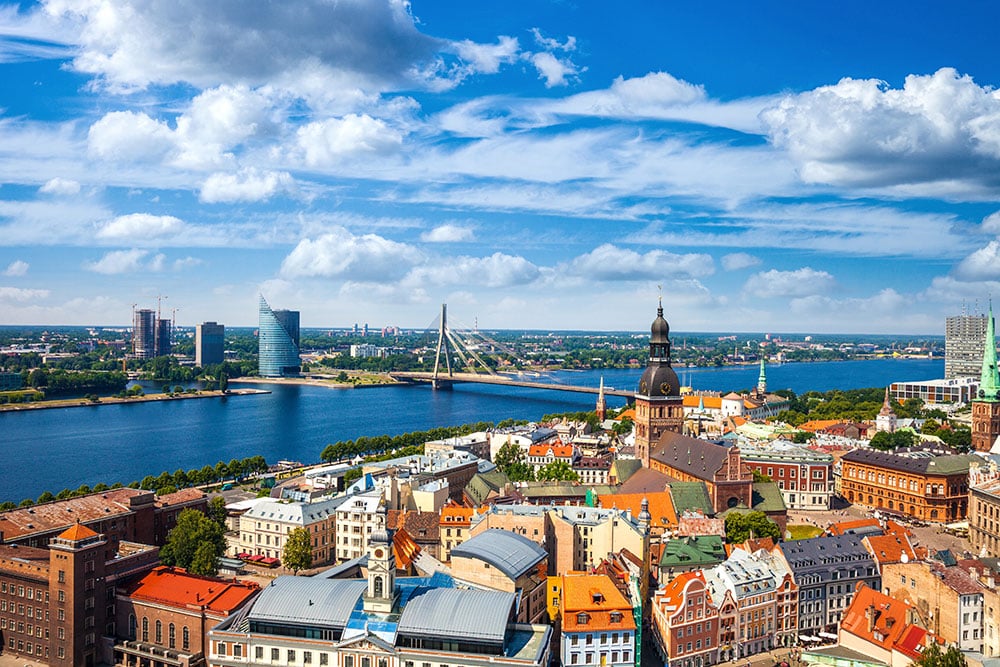
Riga brings together many of Latvia’s media organizations, universities, civic initiatives, and experts working in media literacy, strategic communication, technology, and security. It provides a base from which to examine Latvia’s information environment and its relationship to wider developments across the Baltic region.

Daugavpils offers a contrasting perspective. Located in the eastern region of Latgale, it is a predominantly Russian-speaking city with a distinct regional history and identity. Language use, media access, and questions of belonging are experienced differently there than in the national capital.
Taken together, Riga and Daugavpils show how the same national information environment can vary across regions and communities. They also demonstrate why approaches to media literacy and public communication need to account for differences in language, identity, and access to information.
Studying Media and Security with SRAS
The semester program Baltic Security and the Information Environment combines intensive Russian language study with a four-credit course on information, media, and security in the Baltic region. Students examine information warfare, strategic communication, digital governance, media systems, language policy, and emerging technologies. Individual research, engagement with regional experts and organizations, and travel to Daugavpils and Tallinn provide local, national, and comparative Baltic perspectives. Tallinn introduces Estonia’s experience with digital governance and cybersecurity, as well as a distinct approach to language, integration, and the information needs of Russian-speaking communities.

Students in the program also receive priority consideration for available internships in media, communications, security, and related fields; all placements depend on the student’s qualifications and the host organization’s needs.
The spring break certificate program Media Literacy in the Baltics: Identity, AI, and Security offers an intensive nine-day examination of these questions. Through expert lectures, workshops, site visits, and programming in Riga and Daugavpils, participants explore disinformation, fact-checking, language policy, AI, and community resilience. The program is open to students, educators, professionals, and others with a serious interest in media, security, and the Baltic region.
Riga can also serve as a base for faculty-led programming. Media literacy and disinformation may form the primary academic focus or be incorporated into programs in journalism, communications, international relations, education, Russian language, Baltic studies, history, or digital technology. A program may remain centered in Riga, explore different communities and regions within Latvia, or develop a broader Baltic itinerary incorporating Estonia and/or Lithuania.
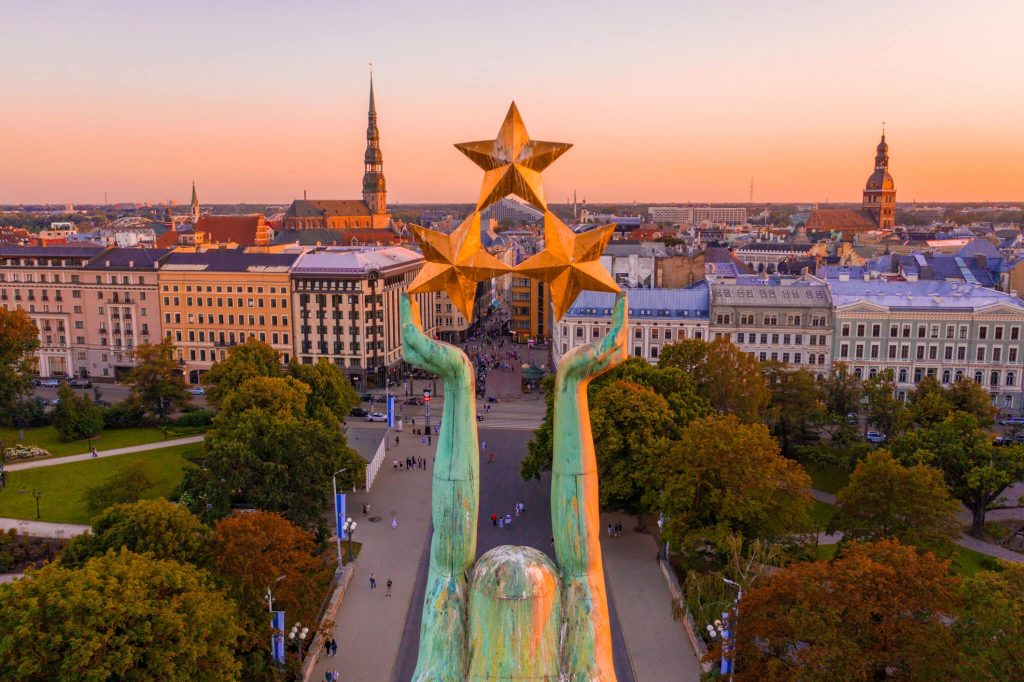
Across these formats, place is integral to the academic experience. Latvia’s history and multilingual society provide essential context for understanding why information has become a security concern and how institutions and communities respond.
Experience Latvia!
SRAS has programs for individual students and supports faculty-led programs.