The Eurasian Corridor
Explore strategically important and dynamic regions through immersive study abroad
From the Baltics to Central Asia, a broad arc of countries sits at the intersection of Europe, Asia, and the Middle East. Across this space, questions of security, identity, language, and political alignment are shared, contested, and constantly evolving.
The regions of the Eurasian Corridor are distinct, each shaped by its own histories, languages, cultures, and relationships. Studied within a broader regional framework, however, they also reveal the ways geography, historical experience, migration, trade, and political relationships connect countries and communities across this space.
This approach allows students to study individual countries and regions in depth while considering the broader forces shaping their place in the world.
What Is the Eurasian Corridor?
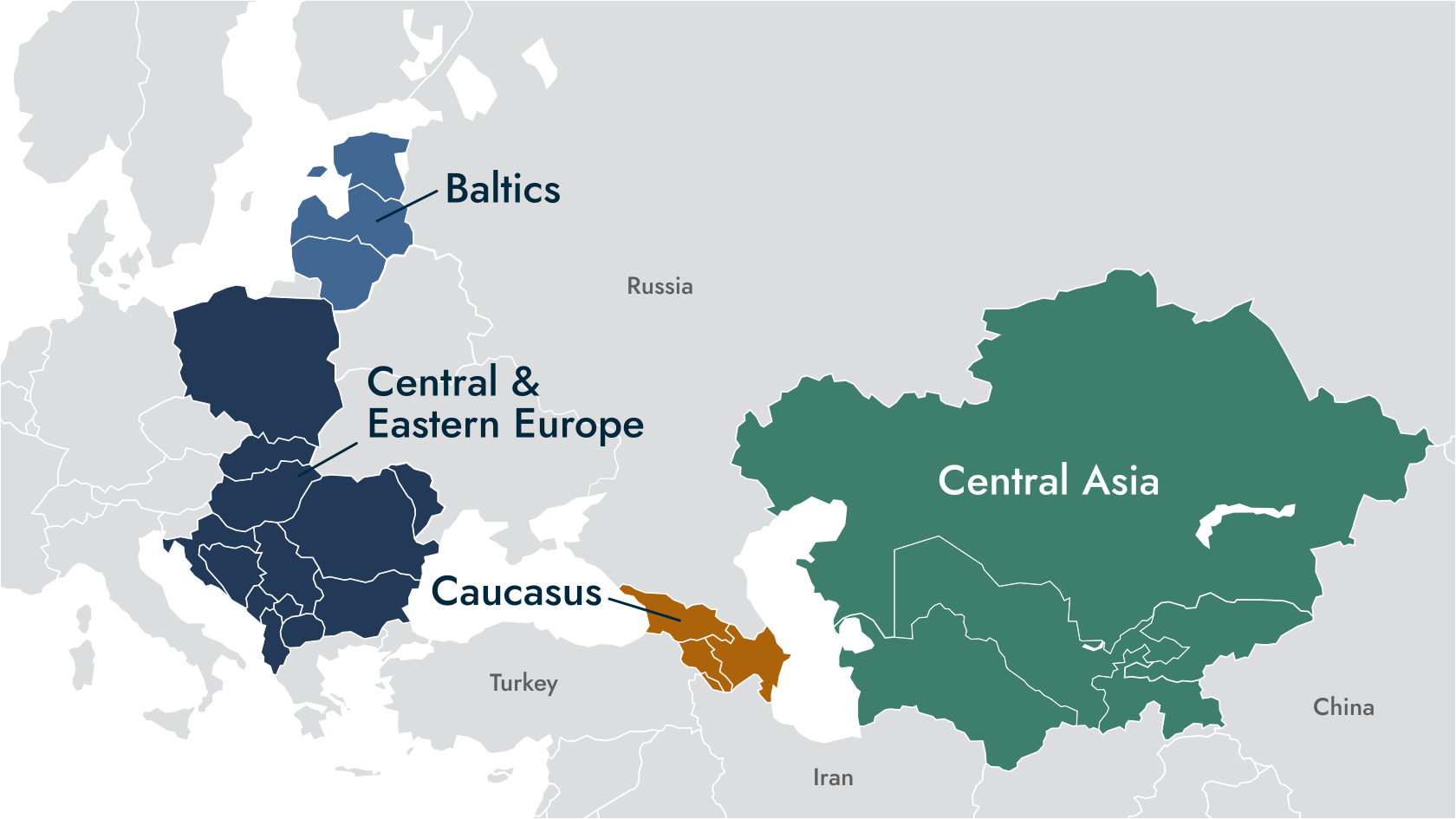
The Eurasian Corridor is a regional framework encompassing the Baltics, Central & Eastern Europe, the Caucasus, and Central Asia. It provides a context for understanding these regions both on their own terms and through the historical and contemporary relationships that connect them.
The Corridor brings together regions connected through:
- History — from ancient trade routes and empires to the legacies of the twentieth century.
- Geography — where Europe, Asia, and the Middle East meet.
- Movement — of people, goods, languages, and ideas.
- Contemporary relationships — including diplomacy, security, trade, energy, and cultural exchange.
Considering these dimensions together provides a broader context for exploring questions of identity, security, language, society, and regional change.
Study the Corridor
SRAS offers multiple ways to study the Eurasian Corridor. Explore programs in language and international relations and security, or work with SRAS to develop faculty-led programming around a wide range of academic interests.
- Learn About IR & Security Programs
International Relations & Security
Examine security, diplomacy, information environments, and regional relationships through field-based study across strategically important locations.
- Learn About Language Programs
Language
Study regional languages within the multilingual societies where they are used, exploring how language intersects with identity, history, and contemporary life.
- Learn About Faculty-Led Programs
Faculty-Led Programs
Work with SRAS to develop custom programs that use individual destinations or the broader Corridor as a framework for exploring academic questions across disciplines.
Why the Eurasian Corridor Matters
The regions of the Eurasian Corridor occupy a strategically important space between major political, economic, and cultural centers. Questions involving European security, Russia, China, Turkey, Iran, energy, migration, information, and trade all intersect here in different ways.
Studying these regions provides a vantage point for understanding how broader global forces are experienced and negotiated at the regional and local level. It also challenges students to look beyond simplified geopolitical narratives and consider how history, language, identity, and local priorities shape the choices countries and communities make.

Explore the Corridor
Whether you’re ready to apply or still exploring your options, we’re here to help. Browse our programs or join an information session to learn more about studying in the Eurasian Corridor.
