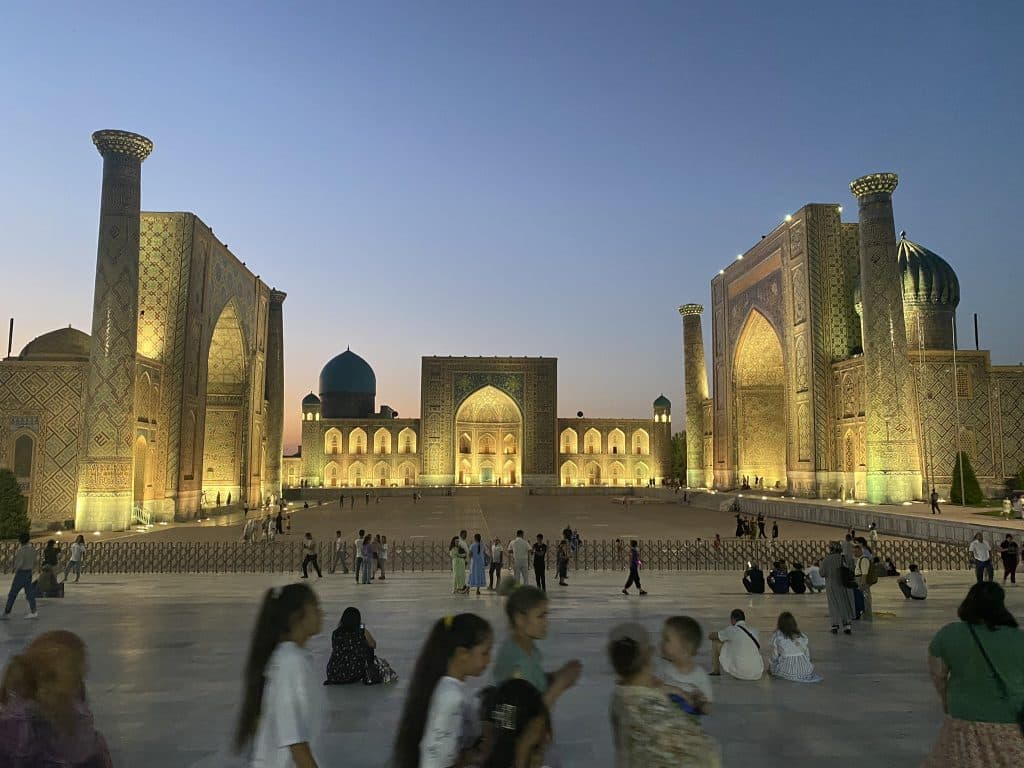
Uzbekistan has long been one of Central Asia’s major centers of trade, scholarship, religion, and urban culture. Cities including Samarkand, Bukhara, and Khiva flourished along the Silk Roads, connecting societies across Eurasia and leaving an architectural and intellectual legacy that remains central to the country’s identity today.
Contemporary Uzbekistan is also undergoing significant economic, social, and urban change. Historic preservation and tourism development intersect with questions of religion, language, national identity, economic reform, and relationships with neighboring Central Asian states.
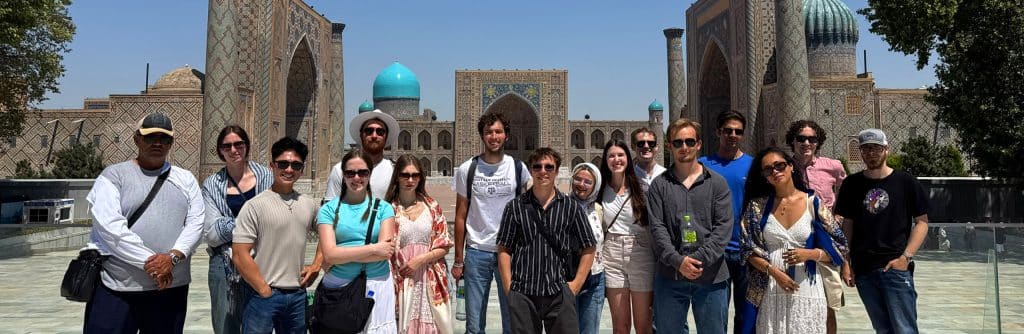
SRAS offers opportunities to study in Uzbekistan through dedicated short-term programs as well as regional programs that incorporate the country into broader study of Central Asia. This allows students to experience Uzbekistan both on its own terms and within the regional relationships that have shaped its development.
Uzbekistan in Central Asia
Uzbekistan occupies a central geographic and demographic position within Central Asia. It borders every other Central Asian state and has the region’s largest population, giving its economic development, transportation networks, water use, and regional relationships significance well beyond its borders.
Its historic cities reflect centuries of exchange across Eurasia, while contemporary Uzbekistan is increasingly important to regional trade, infrastructure, and cooperation. Relationships with Kazakhstan, Kyrgyzstan, Tajikistan, Turkmenistan, Afghanistan, and larger international partners provide perspectives on how Central Asian states are building stronger regional connections while pursuing distinct political and economic paths.
Explore Uzbekistan
These destinations highlight different dimensions of Uzbekistan’s history, culture, landscape, and contemporary society and can inform independent travel or future faculty-led programming.

Tashkent
Uzbekistan’s capital brings together Soviet-era planning, contemporary development, and the institutions of a changing state. Museums, markets, public spaces, and new urban projects offer perspectives on government, education, culture, and Uzbekistan’s evolving role in Central Asia.

Samarkand
One of Central Asia’s great historic cities, Samarkand reflects centuries of trade, scholarship, empire, and cultural exchange. Its monumental architecture and urban heritage reveal how connections across the Silk Roads shaped societies throughout Central Asia and the wider Eurasian region.

Bukhara
Bukhara was a major center of trade, Islamic scholarship, and urban life along the Silk Roads. Its mosques, madrasas, markets, and historic neighborhoods provide perspectives on religion, architecture, commerce, and the cultural traditions that have shaped Central Asia for centuries.

Khiva
Within its historic walls, Khiva preserves an extraordinary concentration of mosques, madrasas, homes, and trading spaces. The city offers perspectives on architecture, commerce, political power, and everyday urban life along the trade routes that crossed Central Asia.

Nukus
Nukus, capital of autonomous Karakalpakstan, offers perspectives on a region with its own language, identity, and history. The Savitsky Collection adds an unusual window into Soviet avant-garde art and cultural preservation, while the wider region reflects major environmental and social change.

Fergana Valley
Uzbekistan’s Fergana Valley is one of Central Asia’s most densely populated and agriculturally productive regions. Its cities, farms, markets, and craft traditions offer perspectives on regional identity, economic life, cross-border connections, and the movement of people and goods.


Programs in Uzbekistan

Spring Break: Navruz in Uzbekistan
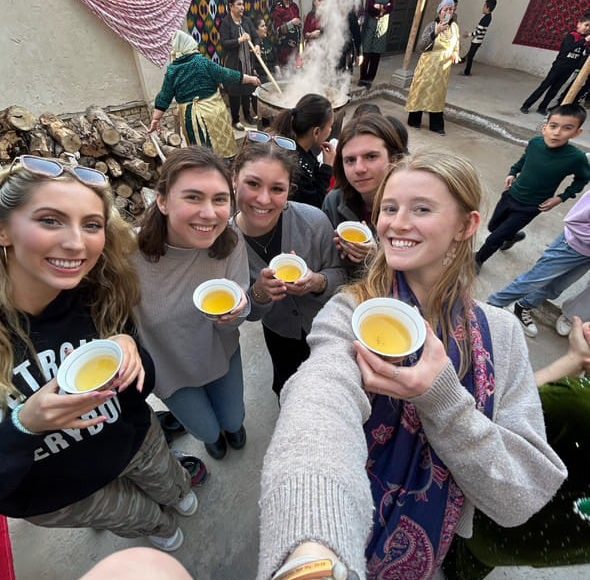
Join SRAS for Navruz in Uzbekistan! This 9-day trip will introduce you to modern Uzbekistan before taking you back in time, immersing you in the art, architecture, culture, and history of this very unique civilization. See for yourself the heritage of the Silk Road, Great Game,…

Central Asia: Connectivity, Power, and Regional Strategy
Explore connectivity, energy, and regional strategy across Central Asia through immersive, multi-country field study.
Programs that include Uzbekistan
Bishkek: Central Asian Studies
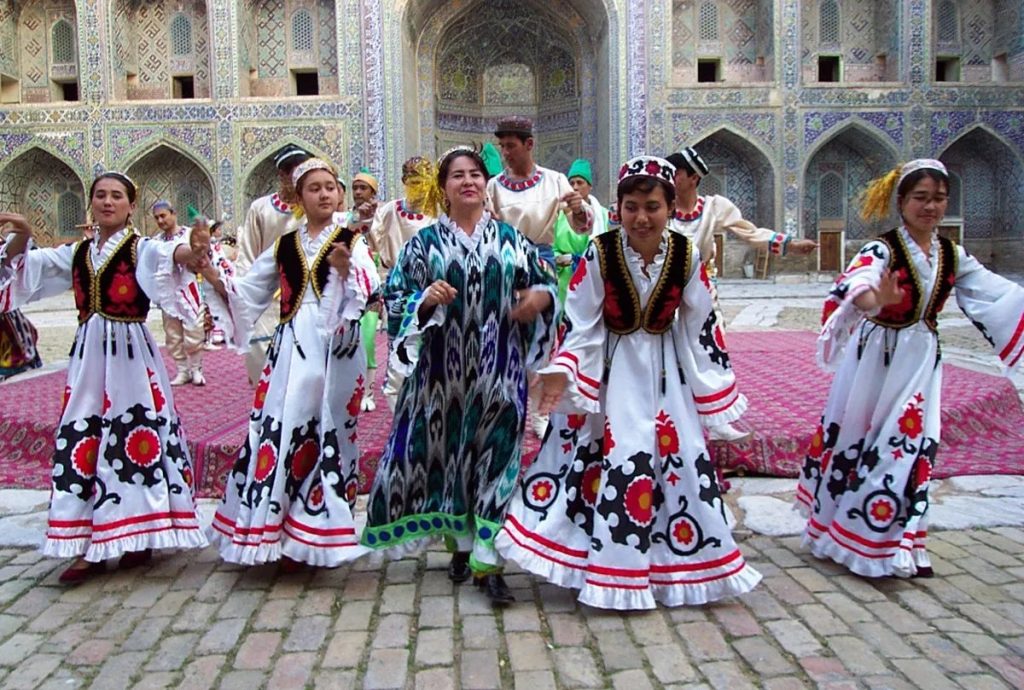
Travel through Central Asia while studying geopolitics, strategic balancing, and energy systems, and using Russian in real-world regional contexts.